
Meet AJIT, 1st Entirely 'Made In India' Chip By IIT Bombay, And It Will Power Our Satellites

India is currently in the middle of an electronics boom that's steadily picking up pace. In the future, we're going to need to make our own processors, in order to offset production costs.

And IIT Bombay may have just started us on that path to self-sufficiency.
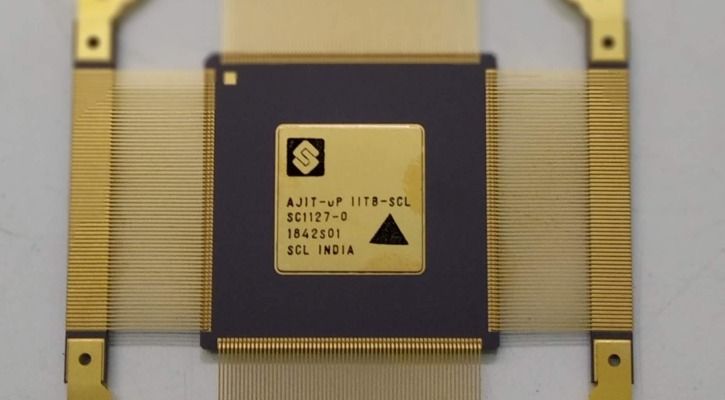
AJIT India processor
IMAGE COURTESY: PRABOT/REDDIT
The Institute has just debuted the country's first indigenously-produced microprocessor for SPARC ISA architecture. AJIT as they call it (no, that acronym doesn't stand for anything) was entirely conceptualised, designed, developed, and manufactured right here in India.
To be clear, India recently had its first indigenously-developed open-source processor in the form of Shakti. That was instead based on RISC-V architecture, and it was developed in collaboration with semiconductor tool design company Bluespec. The other main difference between the two is that Shakti is smaller and geared towards smartphones and IoT devices. Ajit instead is aimed at larger systems like robots, automation systems, appliances, and in the future perhaps even servers and workstations.

Most importantly though, the plan is to eventually put AJIT into India's satellites.

"We are planning to use AJIT in the receivers being developed for NAVIC or IRNNS (The Indian Regional Navigation Satellite System), an indigenous navigation system for the Indian subcontinent," said one of the processor's designers in a Reddit AMA (ask me anything).
"On the government's part, MeitY has extended its funding to enhance the processor and deploy it in government-initiated projects. SAMEER (Society for Applied Microwave Electronics Engineering & Research), an independent lab under MeitY, Government of India is planning to use AJIT in the receivers being developed for NAVIC or IRNNS"
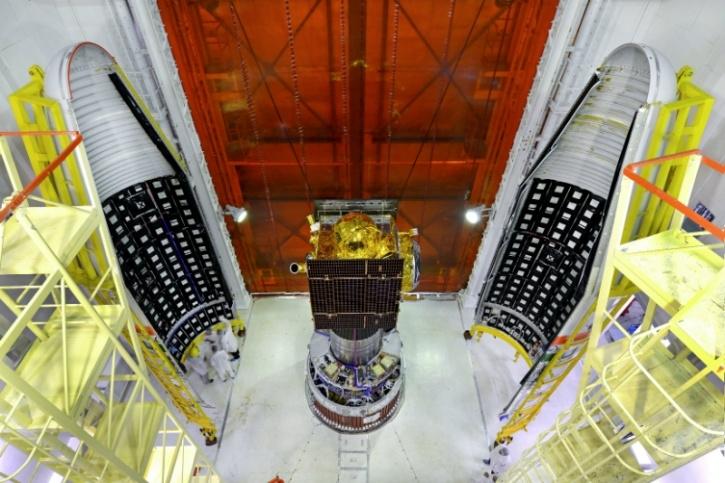
AJIT India processor
ONE OF THE INRSS SATELLITES, WHICH AJIT COULD POWER IN THE NEAR FUTURE - ISRO
AJIT is currently able to run one instruction per clock cycle and at speeds between 70-120MHz, but they expect to achieve 400-500 MHz clock speeds in the next upgrade. It's built on a 180nm technology, though that will eventually be bumped up to 65nm.
The thing is, developing a microprocessor isn't just expensive, it's also really tricky. So hats off to IIT Bombay for achieving this. But on top of that, they've also managed to pull off a final design that's really cheap. The researchers expect that, once they're able to manufacture it in bulk, AJIT will cost as little as Rs 100. And that should happen in just the next year or two, the designer says.

Comments

Popular posts from this blog

🏛️ ICSSR-NSTC (Taiwan) Joint Call for Research Proposals 2026

  Bilateral Collaborative Research in Social Sciences & Humanities An initiative to strengthen academic cooperation between India and Taiwan by supporting joint, high-quality research projects on new and emerging mutual themes. 📅 Key Timelines & Important Dates Application Opens: June 01, 2026 Application Deadline: August 03, 2026 Completion of Peer-Review: October 14, 2026 Result Announcement: December 2026 Project Commencement: January 01, 2027 Project End Date: December 31, 2028 (2-Year Duration) 💰 Funding & Grant Breakdown Total Supported Projects: Maximum of 5 joint research projects. Maximum Funding Limit: Up to ₹12,00,000 (Twelve Lakh INR) per project. Primary Expense Intent: Mobility of researchers (travel, lodging, and ground hospitality). Travel Split: The visiting side bears international & domestic inter-city air travel. The receiving side bears boarding, local lodging, and ground transportation expenses. 🔬 Core Supported Themes & Disciplines Prop...

Marathi Bhasha Diwas 2025 Competitions

 🎉 Celebrate Marathi Bhasha Diwas with Your Creativity! 🎉 In honor of Marathi Bhasha Diwas on 27th February, the Learning and Information Resource Centre (Library) invites all students and staff to participate in a Poetry and Short Story Competition. ✍️📚 This is your chance to showcase your talent and celebrate the rich heritage of the Marathi language! 🇮🇳✨ Themes: 📝 Poetry: माझी मातृभूमी 📖 Short Story: Theme Cards are available in the library. Submission Guidelines: ✒️ Poetry: Max. 30 lines 📜 Short Story: Max. 1000 words 🗣️ Language: Marathi only ⏰ Deadline: 20th February 2025 🎁 The best entries will be featured in the College Annual Magazine 📖 and shared on our social media platforms 📲. Winners will also receive certificates to celebrate their creativity! 🏆 Submit your entries at the Library or via email at: 📧 sfitlibrary@sfit.ac.in Don’t miss out on this amazing opportunity to be part of this special celebration of Marathi! 🌟💬

e PG Pathshala: A Gateway to all Post Graduate Courses

1.What is e-PGPathshala? e-PGPathshala is a one portal under which High quality, curriculum-based,interactive content in different subjects across all disciplines of social sciences, arts, fine arts & humanities, natural & mathematical sciences, linguistics and languages is being developed.An MHRD, under its National Mission on Education through ICT (NME-ICT), has assigned work to the UGC for development of e-content in 77 subjects at postgraduate level. The content and its quality is the key component of education system. 2.Terminology in e-PGp and MOOCs 3.What is difference between e-PG Pathshala and SWAYAM? e-PG Pathshala provides e-content for post-graduate courses in various subjects in four quadrant. It can be accessed as Open Educational Resource where no teacher support/hand-holding for students is available. SWAYAM is a web platform on which MOOCs shall be hosted. These MOOCs shall have teacher-student groups where MOOC coordinator/tutor/tea...