New interdisciplinary course in Robotics, Artificial Intelligence: BEg Mechatronic can help you be a cobotisist

If you are imaginative and creative and want to play a part in developing the robots of the future working alongside humans, then you are a future 'cobotisist'
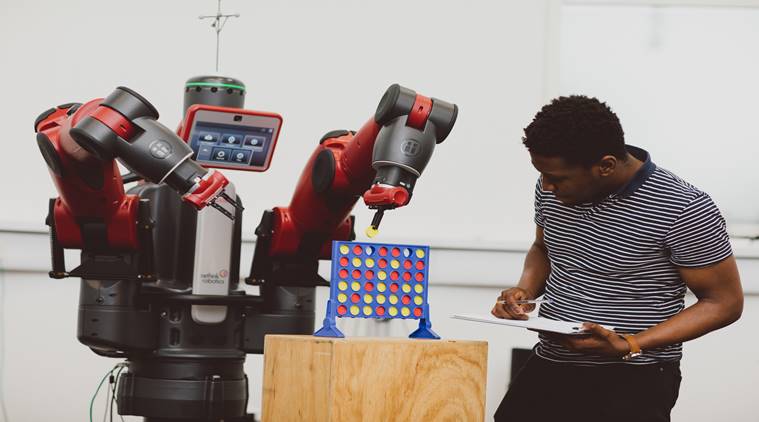
The University of Essex, United Kingdom is set to launch a new course called Bachelor’s in Engineering in Mechatronic Systems – an interdisciplinary field of electrical, mechanical, robotics, electronics, computer engineering, telecommunication systems and product engineering. The three-year undergraduate course will begin from the academic year 2019-20 onwards and the applications process for the same has already begun at the official website — essex.ac.uk. The last date to apply is June 30, 2019.
According to Anthony Vickers, head, School of Computer Science and Electronic Engineering, University of Essex, the course will teach students to design, build and test robotic systems and including the structural frame. The design of the structural frame is the unique element that separates mechatronics from electronic and robotics.
Modules include 3D printing technology, drives and power electronics, computer programming, sensors and digital signal processing, motion control algorithms, computer vision, robotics and embedded systems are also going to be part of the course curriculum.
Talking to indianexpress.com, Vickers said, “If you are imaginative and creative and want to play a part in developing the robots of the future working alongside humans, then you are a future cobotisist”.
“If there is one thing that we can be sure about the 21st century, it is that robots will be with us in increasing numbers. Here in the School of Computer Science and Electronic Engineering at Essex, we like to use the term cobotics — the collaborative working of humans and computers. The new course will align with new research areas within the school, and to provide completeness to our work in cobotics,” he adds.
Who can apply?
Indian students who have completed class 12 or equivalent can apply for the course. The minimum marks required for the course includes an overall average from the four best subjects (excluding PE and local language). For CBSE, CISCE and other regional and national boards, the minimum requirement is 75-70 per cent, including 60 per cent marks in mathematics and 70 per cent in English.
For Karnataka, Madhya Pradesh and Uttar Pradesh boards minimum requirement is 60 per cent, including 60 per cent marks in mathematics. Students who have cleared class 12 from West Bengal board will need 55 per cent marks, including 55 per cent in Mathematics and at least 60 per cent class 10 Science exam.
Placement Scenario
As part of the course, students can undertake a placement year but students will be responsible for finding their placement. The university, told indianexpress.com, that it would ‘support and guide’ them to find a placement. If students complete a placement year they will only pay 20 per cent of their usual tuition fee to Essex for that year.
Source: https://indianexpress.com/article/education/study-abroad/new-interdisciplinary-course-in-robotics-ai-beg-mechatronic-can-help-you-be-a-cobotist-5643840/ (Accessed on March 27, 2019)
Comments
Post a Comment
Have a Say?..Note it down below.