Wednesday, September 11, 2019

From Tamil Nadu’s fields to space: Isro chief K Sivan’s journey

From tilling the family fields with his father in a remote Tamil Nadu village to heading the prestigious Indian Space Research Organisation (ISRO) in Bengaluru and launching India’s ambitious moon mission, Chandrayaan 2, K Sivan has come a long way.

Despite his family’s modest means, Sivan, now 62, pursued his studies, attending his classes and also helping his father in the fields.

He studied at a village government school in the Tamil medium, and did his BSc in mathematics from ST Hindu College in Kanyakumari district. Throughout his early student years, his wardrobe was minimalist (he used to wear a dhoti) and he would walk barefoot. The first time he wore slippers was in engineering college.

Even after all these years, Sivan remains a man of simple needs.

“He still wears plain clothes, even though he is quite fond of wearing white-coloured clothes,” said a colleague and friend of his, who did not wish to be named.

“Same goes for his eating habits. He is the ISRO chairman but during all our project meetings you will find him sitting with the rest of the team members and enjoying a meal of dal-chawal, rasam, papad and curd. He prefers south Indian cuisine,” said the colleague.

Sivan graduated from Madras Institute of Technology in aeronautical engineering in 1980, after which he pursued aerospace engineering from the Indian Institute of Science, Bangalore, in 1982. He also has a PhD in aerospace engineering from the Indian Institute of Technology, Bombay.

Sivan joined ISRO in 1982 in its Polar Satellite Launch Vehicle (PSLV) project and has contributed immensely towards end-to-end mission planning, mission design, mission integration and analysis for all the launch vehicle programmes. He is the chief mission architect for 104 satellites launched in a single mission of the PSLV (PSLV C37).


“He is a perfectionist, and doesn’t accept substandard work. Even the presentations need to be perfect; even if he finds a minor error in a presentation before it’s to be presented, he cancels the meeting until the corrections are made. Behind his benign appearance is a tough taskmaster. He is a workaholic and also expects his team to put in their 100%,” the colleague said.

Sivan evolved a cost-effective strategy for the 2014 launch of the Mangalyaan Mars Orbiter Mission (MOM) using the PSLV. In addition to this, he is the primary developer of 6D trajectory simulation software SITARA which is used for mission planning of ISRO launch vehicles. Sivan is also the primary developer of Day of Launch – a wind biasing strategy for launch vehicles that has enabled all-weather launches.

He is the chief architect of ISRO’s space transportation and technology roadmap for meeting future requirements as well as augmenting existing capabilities in a phased manner.


During his career at ISRO, he has held many responsibilities -- group director, mission simulations and synthesis group; project director, reusable launch vehicle—technology demonstration programme; and chief controller, Vikram Sarabhai Space Centre that he later also headed.

As part of his innovative approach to making space technologies useful in day-today life, Sivan also has had discussions with the medical fraternity for development of medical devices in key areas.

The proposals for development of advanced microprocessor controlled artificial limb and artificial heart pump called Left Ventricle Assist Device has now been taken up in association with industry partners for prototype development as well as field trials.

India's cyber security chief highlights security risks of 5G, IoT

NCSC Lt General Rajesh Pant said the government has to take decision on Huawei
By PTI September 06, 2019 22:05 IST
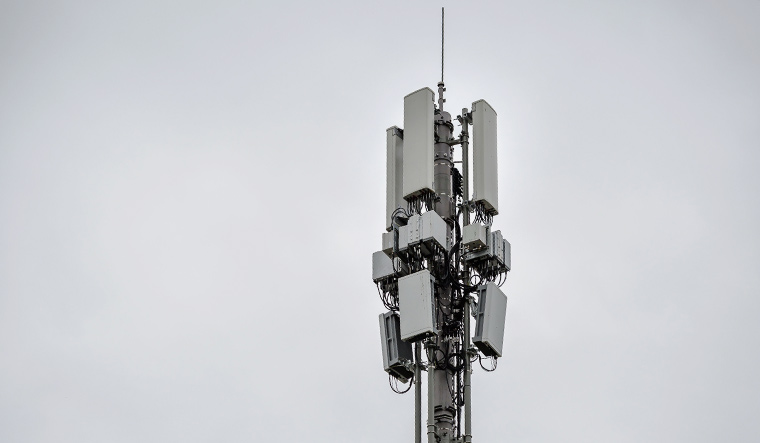
(Representational image) An antenna for the 5G mobile network service is pictured in Etoy, western Switzerland | AFP

Security is a big issue in 5G and the decision around participation of Chinese telecom gear major Huawei should be taken after proper consideration, the country's top cyber security officer said on Friday.

National Cyber Security Coordinator Lt General (Dr) Rajesh Pant also said that 5G will not be limited to telecom networks but will have an impact across all sectors.

Meanwhile, Huawei said security and privacy are its highest priority and the company strictly adheres to all local laws and regulations.

"Government has to decide on it (participation of Huawei). We can tell you from technology aspect. Thereafter, its economics and political part will be seen. Security is an issue, there is no doubt in it. 5G is not just a pure telecom network. It has many things that are connected to our lifestyle," Pant told reporters on the sidelines of CII Telecom Convergence Summit.

He was responding to a question on the views of his office over the participation of Huawei in 5G trials in India.

Pant said that 5G technology will be connected to the internet of things (IoT) that will be installed in homes and industrial IoT will be operational in electric vehicles, healthcare systems, agriculture and drones, among others.

"If someone wants to add malware in system, it will not only disturb telecom network but it can also disrupt health system, agriculture, industry. It is a big security issue. In this, we will have to take decision only after proper consideration. There has been no decision on it as of now," Pant said.

"We will have to see our national interest," he added.

The US has banned Huawei's 5G technology, saying the company's systems could be manipulated by Beijing to spy on other countries and disrupt critical communications.

When contacted, Huawei said it hopes the Indian government makes an "independent and informed decision" that provides a level playing field for all players for the country and not based on country of origin or speculative allegations lacking evidence.

Huawei India CEO Jay Chen said, "It is well known that Huawei is closely working with all governments, including the Indian Government on 5G technology, solutions and security issues. Beyond that, it is to be noted that Huawei has stepped up to advocate to the industry to sign the no backdoor' agreement with the Indian Government to secure network security. We share the same opinion as the Indian Government that network security is important and it depends upon the joint efforts of all stakeholders."

Huawei said it has subjected itself to the strictest reviews and screening by regulators and customers.

The company's 30-years of operational track record across 170 countries is proof of the security of its networks, it added.

Saturday, September 7, 2019

UK-born Indian teens bring out Ramayana audiobook


English narrative translated into Hindi, Telugu


At a time when teenagers are busy aping the western culture and almost ignoring the Indian epics, two British-born Indian descent teenagers stand out for not just trying to propagate the values espoused by the Ramayana but also their work now licensed by the British Airways.

The London-based brothers, Shreyas Pulle and Ayur Pulle, have created a one-hour audiobook “Ramayana: An Ancient Indian Epic” that introduces the compelling epic to non-Indians and also gives the Indian listeners a refreshing perspective.

It all started when Ayur’s Jewish dominated school in London asked him to perform in an Indian play in which he played the character of Hanuman. Ramayana’s characters struck him and coming from a traditional Indian family the growing interest was natural, reveals Ayur’s mother Neelima Penumarthy.

Flawless narration

His elder brother Shreyas then teamed up to create a simplified version of the complex classic and decided to go the audio way to reach out to people. The simple language added with flawless narration and smooth adoption of the characters makes it further interesting, even for those newly introduced to Ramayana.

The audiobook gained popularity in British circles and was judged one of the best in its segment. To their delight, the British Airways has licensed it to place it on its in-flight entertainment until 2028.

The English narrative is now translated into Hindi with the help of Hindi teacher and students at the Kendriya Vidyalaya, Uppal and also to Telugu by the maternal grandmother of the brothers.

Ms. Neelima explains that the Hindi version of the audiobook has been recorded with six students from 10th and 12th class of Kendriya Vidyalaya, Uppal No 1 where she studied.

A socially conscious Neelima is now making an effort to rope in visually challenged students to bring out the Telugu audiobook involving three students from the Devnar School for the Blind, Begumpet. “Braile version of the book is given to them and the visually challenged students have done a wonderful work. It should be out in a few days,” she says.

The narration of the epic by the blind students is challenging as they have to visualise something they have not seen. “Some of them have such mellifluous voice and their narration has made a difference,” she said.

Neelima, who runs a company, ‘Puranas’, that connects culture through stories has also produced a 15-minute puppet show based on the audiobook. It was performed in several schools in London and last year it was performed at the Diwali celebrations sponsored by Mayor of London at Trafalgar Square. “We will be doing the same this year as well,” she adds.

Friday, September 6, 2019

Damaged by floods in Sangli, library’s mission to save 75,000 books: Staff, students, 6 hair dryers

The biggest concern remains the manuscripts — nearly 300 had been digitised recently, but the computer that stored the records was washed away.

Written by Ajay Jadhav |Sangli |Updated: September 6, 2019 8:30:22 am


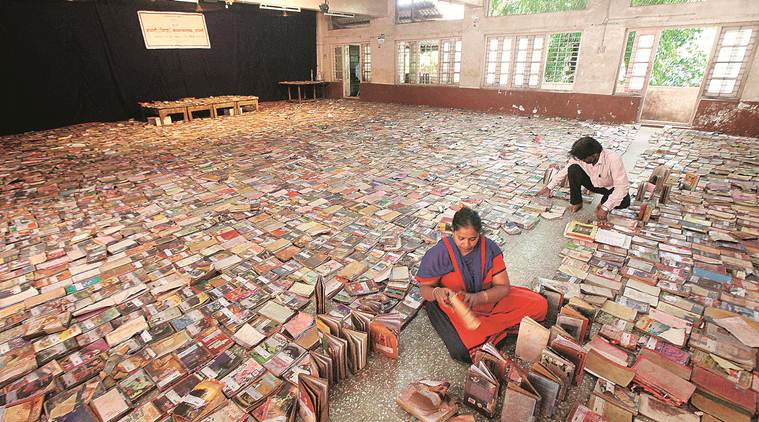
At the Sangli District Nagar Vachnalaya, one of the oldest public libraries. (Express photo by Pavan Khengre)

GROUPS OF students in shifts, staff, well-wishers — and three heaters plus six hair dryers.
Advertising

For nearly a fortnight now, this combination has been hard at work at the Sangli Nagar Vachanalaya to save whatever is possible from the thousands of books and rare manuscripts damaged in the recent floods in southwestern Maharashtra.

The 150-year-old three-storey facility, with 2,500 members, is one of the oldest public libraries in the country. It houses over 1.8 lakh books and documents, including over 600 rare manuscripts from 400 years ago. Of these, officials estimate that nearly 75,000 books and at least 100 manuscripts were damaged in the floods that submerged parts of Sangli, Satara and Kolhapur in August.

“Most of the books were on the ground floor to enable easy access. We tried to save them as the water started entering, but had to finally leave to save our own lives,” says librarian Surekha Naik.
Advertising


Today, many of the damaged books are beyond repair. Some have also started showing signs of fungal growth. The others have been spread on the floor across the building, from the staircase to the passage and the cultural hall. Naik is among the six fulltime staff busy arranging the books to dry under the ceiling fans. Then, there are the hair dryers. “We gave priority to the manuscripts and began to dry them with a hair dryer as there was no other way. We had one dryer at the beginning. Our appeal to members resulted in five more being used. They are effective,” says Naik. The library is also using three heaters, two of them donated by members. “We were also fortunate to get additional hands from Pune and Sangli colleges. Three teams of ten students each came down and stayed with us for two days in rotation to help us prepare a list of damaged books,” she says.

The biggest concern remains the manuscripts — nearly 300 had been digitised recently, but the computer that stored the records was washed away. “Fortunately, the person who had carried out the digitisation had saved another copy,” says Naik.

“I have gone through about 10,000 manuscripts in libraries across the state but those in Sangli Vachanalaya were in the best condition,” says Priyanka Mujumdar, who digitised the manuscripts in Sangli under the National Mission for Manuscripts of the Centre.

”The manuscripts relate to ancient texts, including the Vedas, Puranas, Dharmashastra, Ayurveda, Jyotishshastra, etc. It would require a miracle to save them now, considering that the paper and ink were so old,” says Mujumdar, who is a post-graduate in Sanskrit and diploma-holder in Manuscripts.

At the library, staff say financial assistance is required to replace damaged furniture and computers. Once operations resume, possibly within the next six months, the library also plans to prepare a list of books lost and issue an appeal for copies to be donated.

”We are also reaching out to experts for preservation of the books. We will take the help of social organisations to fund our efforts,” says Atul Gijre, secretary of the governing body of Sangli Vachanalaya.

According to Ujjwala Londhe, district library officer, 17 public libraries in Sangli were affected by the floods, with three small libraries getting completely damaged. The district library office has estimated a loss of Rs 63.7 lakh, including Rs 39.95 lakh in Sangli Vachanalaya alone.

Saturday, August 31, 2019

Active Users of the LIRC - August 1-31, 2019

Sr. No. Member No. of Transactions
1 SAHU MADHUSHREE DAMBARUDHAR SONALI 37
2 PHILIP FRANCIS FERNANDES 25
3 DSOUZA NELSON NORBERT PAUL DSOUZA ALICE DSOUZA 25
4 BHATT PARTH CHYAVAN VAISHALI 25
5 ANDHALE SHREYA VILAS URMILA 25
6 OJHA ANOOP PARASNATH SHANTIDEVI 24
7 LOBO ANDREA KARLTON ALICE 23
8 AHUJA RISHIKA SANDEEP DIPALI 23
9 MELVIN YOHANNAN MARIAMMA YOHANNAN 23
10 CHAUHAN DEEPAK DINANATH SHEELA 22

All the above "Active Users" are eligible for one extra book from the Library for the following month i.e. September 2019.

LIRC @ A GLANCE: AUGUST 2019

-->
LIRC AT A GLANCE AS ON 31/08/2019
Name of Library Software: LibSuite 6.5
U.G. BOOKS
Total Titles: 10448
Total Volumes: 27320
Editions : 341

Ref.Books : 3472(UG= 3181 PG=291 )
P.G. BOOKS
Total Titles: 292
Total Volumes: 1187
Editions : 02
Books in the BOOK BANK: 1459Faculty Publications: 305
E-Books : 55
Doctoral Theses : 11
Project Reports: 1800
CDs: 3135
VIDEO DVD: 64
PERIODICALS

Total Journals for UG = 39
UG Courses: 37 (National)
UG Courses: 02 (International)

Total Journals for PG = 10
PG Courses: 10 (National)

Total Subscribed Magazines: 19
Technical : 07
Non-Technical Magazines: 12

Total Gratis Magazines: 8

Technical : 02
Non-Technical Magazines: 06
E-PACKAGE :

IEEE/IET Electronic Library (IEL)The full-text of IEEE content published since 1988 with select content published since 1872 from:
IEEE journals, transactions, and magazines, including early access documents IEEE conferences IET journals IET conferences IEEE published standards IEEE Standards Dictionary Online
Membership of: IIT Bombay Library National Digital Library
Area: 482.39 Sq. metersSeating Capacity: 260

ALL
Total Members Visited Members % Unique Members %
1976 3240 163.97 967 48.94
STAFF
Total Members Visited Members % Unique Members %
164 55 33.54 37 22.56
STUDENTS
Total Members Visited Members % Unique Members %
1812 3185 175.77 930 51.32
INFT
Total Members Visited Members % Unique Members %
546 941 172.34 272 49.82
CMPN
Total Members Visited Members % Unique Members %
553 961 173.78 294 53.16
EXTC
Total Members Visited Members % Unique Members %
518 883 170.46 275 53.09
ELEC
Total Members Visited Members % Unique Members %
83 253 304.82 44 53.01
MECH
Total Members Visited Members % Unique Members %
112 134 119.64 40 35.71

Friday, August 30, 2019

UGC urges colleges, varsities to join PM’s Fit India Movement, create fitness plan

In an attempt to bring focus to fitness among the youth, the University Grants Commission (UGC) recently shared a circular on its website, urging affiliated colleges and universities to participate in the ‘Fit India Movement’, which Prime Minister Narendra Modi launched yesterday.

As part of the movement, universities and colleges have been asked to make efforts to improve the health and wellbeing of students as well as teaching and non-teaching staff, in order to achieve physical fitness, mental strength and emotional equanimity.

“The Fit India Movement helps take the nation forward on the path of fitness and wellness and it provides a unique and exciting opportunity to work towards a healthier India,” said the circular released by UGC.

“Every person should pledge and attempt to walk 10,000 steps… and follow it up in his/her daily routine,” states the circular. It further requests institutes to implement an institutional fitness plan to incorporate exercise into the daily routine of staff and students.

HRD directs UGC to set up committee to probe 'sale of fake degrees

Thursday, August 29, 2019

Microsoft and ISB partner to advance AI skilling in India

The two will collaborate in research which will use AI and Machine Learning to study issues relevant for business and public policy
The partnership will also jointly introduce a new executive programme


New Delhi: The Indian School of Business (ISB) and Microsoft India announced a new partnership on Friday to take forward their shared vision for an AI-empowered India at an event in Hyderabad.

Through the creation of the AI Digital Lab, the two organizations will collaborate in research which will use Artificial Intelligence (AI) and Machine Learning (ML) to study issues that are relevant for business and public policy.

In addition, the partnership will also jointly introduce a new executive program titled “Leading Business Transformation in the Age of AI" in October 2019 which will equip business leaders with tools and strategies to transform their respective organizations to AI-driven organizations.

The rapid development of AI implies that the ability of business leaders to creatively use AI to improve business decisions and enhance productivity will become a very important precursor for businesses to stay competitive and be successful. AI-readiness is therefore an important skill that business leaders should acquire sooner than later.


Professor Rajendra Srivastava, Dean, Indian School of Business and the Novartis Professor of Marketing Strategy and Innovation, said “Business Schools are attempting to redefine management education by making it more future-ready and relevant for opportunities and challenges that businesses will face in the future. Transforming organizations guided by Artificial Intelligence and augmented by frameworks integrating analytics with human behavior and management issues will be an important imperative for business leaders. Our collaboration with Microsoft India will enable us to use AI to understand new phenomena that are relevant for business as well as policy and subsequently disseminate the knowledge to business leaders who will need to transform their businesses through artificial intelligence to compete effectively."

Anant Maheshwari, President, Microsoft India said, “AI is a gamechanger to drive new business models and transform today's businesses and workplaces. With this coming together of ISB and Microsoft, it is a unique opportunity to increase the innovation with AI in business. Our new partnership with ISB will empower business leaders to increase their tech intensity and do more with AI."


ISB’s executive program, titled “Leading Business Transformation in the Age of AI" in collaboration with Microsoft will enable C-suite executives to come up with a coherent strategy to transform their respective organizations into AI-driven organizations. The 3-day non-technical program is done under the purview of Microsoft’s online AI Business School, which provides executive-level insights and practical, actionable guidance to build an end-to-end AI strategy. It will focus on managing the impact of AI on company strategy, culture and responsibility.

Source: https://www.livemint.com/ (Accessed on August 29,2019)

Take-home salary may rise under new Employees' Provident Fund law

At present, 24 per cent of a worker's basic pay is deducted - with 12 per cent each counted as employer's and employee's share - towards the EPF savings

The government has proposed to reduce the contribution made by employees towards the Employees’ Provident Fund (EPF), in a move to increase take-home salary. The government wants to reduce the rate of contribution — part of the employee’s share — for a class of workers depending upon age, income or gender, without changing the contribution from the employer’s share.

The proposal is part of the proposed Employees’ Provident Fund and Miscellaneous Bill, 2019. The ministry has also proposed providing an option to workers to switch between the ...

To read the full article, please visit:

Young biologist from Andhra Pradesh recreates a blue whale from bones

Complete skeleton formed in Andhra Pradesh using remains of several of the giants washed ashore

It was like a jigsaw puzzle for the young wildlife biologist looking at the skeletal remains of dead blue whales washed ashore on the Andhra Pradesh coast. But he found a way to put them all together. All in just two months. Where the parts were missing, he used plaster of Paris and put in stainless steel and screws to configure a life-size skeleton of the endangered species.

In 2017, Kumpatla Balaji, an Andhra University alumnus, launched a project to use the skeletal remains to form the blue whale, replicating its natural anatomy structure. He was spurred to do so, after experts were unable to fit the bones collected from the Machilipatnam coast.

Mr. Balaji is a research scientist at the Coringa Marine Museum in Rajamahendravaram city, where the 32-ft-long life-size blue whale (Balaenoptera musculus) skeleton he engineered is being preserved and on public display since early 2018.

“Dozens of skeletal remains of blue whales were lying with our museum, begging to be assembled,” said Mr. Balaji.

“Many bones and the head part of the blue whale were brought to our museum by the Forest Department from Machilipatnam coast in 2017, helping me form the complete skeleton within two months,” the research scientist said.

The skeletal parts were chemically treated before being rigged together with stainless steel. “At least two bones were made of plaster of Paris as they were missing.”

The blue whale falls in Schedule I of the Wildlife (Protection) Act, 1972. Dozens of dead blue and sperm whales have washed ashore on the Nagayalanka, Machilipatnam, Kakinada, and Srikakulam coast in Andhra Pradesh since 2015. What caused their death is the subject of study.

Did you know life insurance rules have changed?

On new ULIPs, the minimum sum assured will be less than 10 times the premium

IRDAI (Insurance Regulatory and Development Authority of India) issued a notification on new regulations in ULIPs (unit linked insurance plans) and traditional insurance policies, a few weeks back. Of the several changes, the move to reduce the minimum sum assured (SA) in ULIPs and a guaranteed surrender value for traditional policies from the second year, were prominent.

IT industry on hiring spree, adds record number of employees in Q1

Around 85,000 employees added on net basis, highest in six years

The Indian information technology (IT) industry added a record number of employees in the April-June quarter (first quarter, or Q1) of the ongoing financial year, with around 85,000 new hires. This is the highest-ever net employee addition by the industry in a single quarter in six years, according to a recent report by equity research firm CLSA.

Industry experts are of the opinion that the spurt in recruitment happened as IT services firms went aggressive on hiring in anticipation of a strong demand environment. This was supplemented by healthy hiring in onsite locations, triggered by ...

IIT-Hyderabad develops waterproofing material using fly ash

Stearic acid-coated fly ash surface can be made to behave like rose petals or lotus leaves.

Researchers at the Indian Institute of Technology (IIT) Hyderabad have developed a cheap waterproofing material by coating fly ash, a waste by-product from coal-based thermal power plants, with stearic acid, which is a surfactant. While fly ash is extremely water-loving (hydrophilic), it turns into a highly water-repelling surface once coated with stearic acid.

The stearic acid has a hydrophilic part called the head and hydrophobic portion called the tail. While the head of stearic acid which is hydrophilic binds to fly ash particles, the water-repelling tail remains free. Numerous free hydrophobic tails of stearic acid makes the fly ash surface water repellent.

Fly ash varies in size from 100 nanometres to a few microns and can thus provide surfaces with different roughness based on the size of the particles chosen. The stearic acid-coated fly ash surface can be made to behave like one of the two naturally occurring water-repelling materials — rose petals or lotus leaves — by the varying the surface roughness.


In the case of a rose petal the surface repels the water but at the same time the structure of the petal ensures that the water droplets adhere to it. Thus, even when inverted, water droplets do not fall down. On the other hand, in the case of the lotus leaf, water droplet rolls off easily.

“When we used particles of more or less uniform size, the inter-particle space is more and water penetrates and sticks to the surface like in the case of a rose petal and remains adhered to the surface even when we tilted it to 90 and 180 degrees,” says Dr. Atul Suresh Deshpande from the institute’s Department of Material Science and Metallurgical Engineering and corresponding author of a paper published inChemistry Select.

The topography changes completely when fly ash particles of different sizes are used. The smaller particles tend to fill the gap between the larges ones thus resulting in a tighter packing with very little gap between particles. “Air pockets tend to form when the gap between particles reduces making it difficult for water to get into the gaps. Water droplets are suspended on top of the air pockets and so has less adhesion to the surface. So when the surface is tilted slightly (5 degree) the droplets tend to roll off easily,” says Dr. Mudrika Khandelwal from IIT Hyderabad and a co-author of the paper.

“By using a combination of stearic acid and surface roughness we were able to achieve superhydrophobicity (where the water contact angle is more than 150 degree),” says Urbashi Mahanta, a PhD student from IIT Hyderabad and first author of the paper. “We used a simple process of particle distribution to achieve the two types of hydrophobicity.”

The extent of hydrophobicity increased in both surfaces when the drying temperature was increased from 60 degree C to 80 degree C. The melting point of stearic acid is over 69 degree so when heated to 80 degree C the surfactant melts leading to better coverage and therefore smoother surface compared with samples treated to 60 degree C. Samples with tight and loose packing when treated to 80 degree C showed more hydrophobicity. The stearic acid-coated fly ash can be used as a waterproofing material. Owing to its hydrophobic nature, the surface can be easily cleaned. One can use an adhesive to apply the stearic acid coated fly ash on a surface,” says Dr. Deshpande.

More work is needed to test the mechanical and chemical durability of the fly ash waterproofing material.

Mann Ki Baat: PM calls for mass movement against single-use plastic from Oct 2

In his monthly radio address ‘Mann ki Baat’, the prime minister said when the country observes the 150 birth anniversary of the Father of the Nation, “we will launch a new mass movement against use of plastic”.

Prime Minister Narendra Modi on Sunday urged people to observe the 150th birth anniversary of Mahatma Gandhi this year as a day to make India plastic-free and exhorted municipalities, NGOs and the corporate sector to come up with ways for safe disposal of accumulated plastic waste before Diwali.

The call for a mass movement came days after Mr. Modi’s Independence Day’s address in which he had urged people to shun ‘single-use’ plastic to protect the environment.

In his monthly radio address ‘Mann ki Baat’, the Prime Minister also urged people to participate in the annual ‘Swachhta Hi Seva’ or ‘the quest for cleanliness is service’ campaign, which will begin on September 11 this year.

“This year, on October 2, when we celebrate Bapu’s 150th birth anniversary, we shall not only dedicate to him an India that is open defecation-free but also shall lay the foundation of a new revolution against plastic, by people themselves, throughout the country,” he said.

He said people from all strata of the society should celebrate Gandhi Jayanti this year as a day to make “Mother India plastic-free“.

The Prime Minister urged all municipalities, municipal corporations, district administrations, gram panchayats, government and non-governmental bodies to work towards ensuring adequate arrangement for collection and storage of plastic waste.

“I also appeal to the corporate sector to come out with ways and means for appropriate disposal of all accumulated plastic. It can be recycled; it can be transformed into fuel. This way we can accomplish our task of ensuring safe disposal of plastic waste before this Diwali,” he said.

Diwali festival this year falls on October 27.

He said all that is required to take up the challenge is resolve and “what can be a greater inspiration than Gandhi?”.

In his Independence Day’s address, Mr. Modi had urged citizens to eliminate ‘single-use’ plastic and suggested that shopkeepers provide eco-friendly bags to customers.

“This campaign has enthused people ... Many of my merchant brothers and sisters have put up a placard at their establishments, boldly mentioning that customers ought to carry shopping bags with them. This will result in monetary savings as well as one would be able to contribute towards protection of the environment,” he said.

MSU accepts UGC changes for PhD

UGC plans panel to shape anti-bullying policy in schools and colleges

A government official said on condition of anonymity that the panel will prepare draft amendments to existing anti-ragging regulations to add ways to curb bullying and also prepare an action plan to implement them.
The University Grants Commission (UGC) plans to form a high-powered panel to suggest norms to curb bullying in colleges and universities and to come up with an implementation plan. (HT FILE)

India may soon have an anti-bullying policy in schools and colleges to combat a menace that is increasingly rearing its head in schools and colleges across India, especially with students from diverse social and economic backgrounds increasingly studying together.

The policy will be framed for colleges first. The University Grants Commission (UGC) plans to form a high-powered panel to suggest norms to curb bullying in colleges and universities and to come up with an implementation plan to put them into practice, according to an order the higher education sector regulator issued recently in this regard.

A government official said on condition of anonymity that the panel will prepare draft amendments to existing anti-ragging regulations to add ways to curb bullying and also prepare an action plan to implement them.

A second official who asked not to be named said the recommendations will also be passed onto the HRD ministry’s school education department for the implementation of the norms in schools.

“The UGC has come up with elaborate regulations as far as ragging is concerned. However, bullying is another problem that silently makes the education experience a nightmarish experience for many,’’ a third ministry official said on condition of anonymity.

Globally 32% of all students aged 13-17 years had been bullied at school in the month preceding the publication of a United Nations Educational, Scientific and Cultural Organisation (UNESCO) report on bullying in February. According to UNESCO, bullying is the most common example of school violence and includes physical, psychological and sexual violence. It found frequently bullied students are nearly three times more likely to feel like outsiders, and are more than twice as likely to miss school.

The Teacher Foundation, a non-profit trust promoting the development of schools and educators in India, studied bullying between 2013 and 2017 across 15 Indian cities and found that 42% students in classes 4-8 and 36% in classes 9-12 reported it.


One of the officials cited above said the decision to form the panel was taken at an inter-council meeting of HRD ministry, UGC, Central Board of Secondary Education and National Council of Educational Research and Training (NCERT) and other officials in May this year.

According to the order cited above, UGC chairman D P Singh has formed the panel under the leadership of Sushma Yadav, who is a UGC member and Sonepat’s BPS Mahila Vishwavidyalaya vice-chancellor.

HT has accessed a copy of the order, which said the panel would include representatives from NCERT, CBSE, HRD ministry and All India Council for Technical Education.

The third official cited above said ragging is an issue that emerges at the time of admissions in colleges, but bullying, while invisible sometimes, is as prevalent a problem, and probably not even time-specific.

“Moreover, apart from a senior student intimidating junior ones, there can be issues which are region-specific or are linked with social realities. The committee will examine the issue of bullying from all aspects,” the official said.

“Though at the Higher Education admission stage the UGC has very stringent anti Ragging Regulation the same is missing at the school level. It is a well known fact that some senior school students are great bullies. School students are in a very wide age spectrum. They enjoy sadistic pleasure in harassing their juniors which are far younger than them. Therefore this UGC initiative is very timely,” said eminent educationist Prof Inder Mohan Kapahy.

UGC notice to University of Mumbai over blind eye to 'plagiarism' woes

Students feel the varsity is stimulating the 'copy-paste' culture among the students by not abiding the UGC policies.


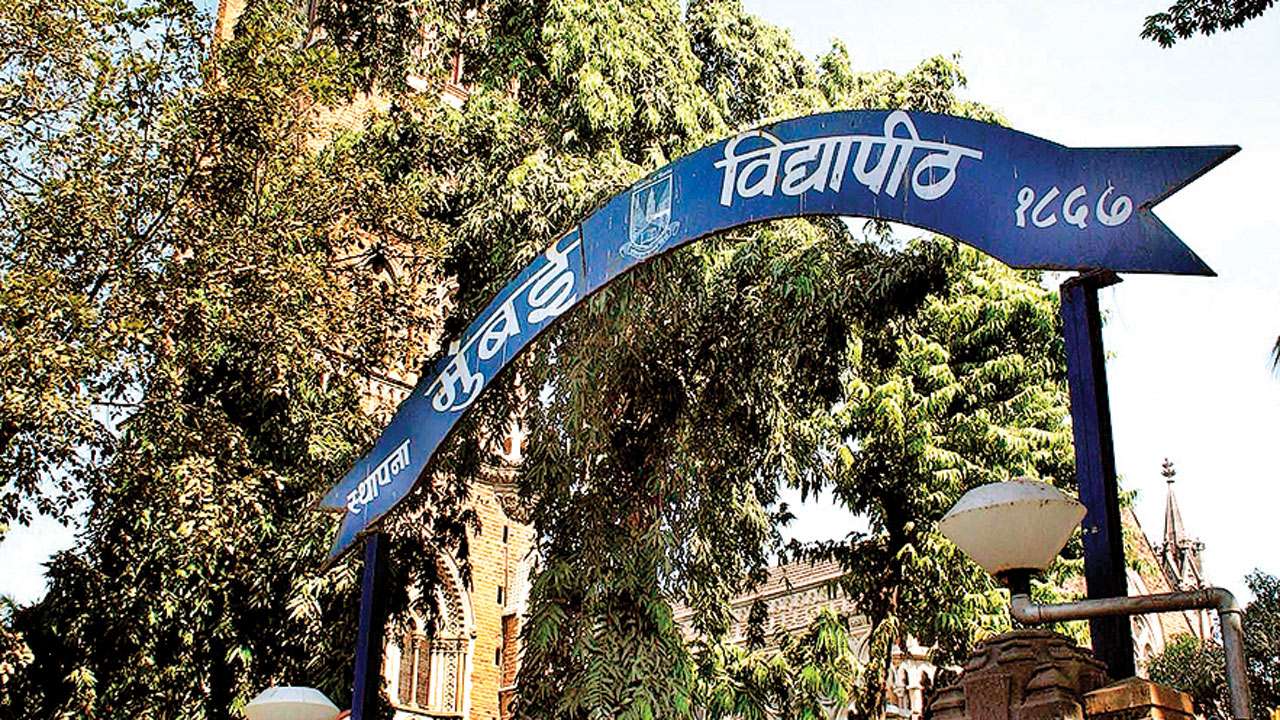
Mumbai University

In May this year, the University Grants Commission (UGC) had sent a notice to the University of Mumbai (MU) regarding detection and prevention of plagiarism manual. This letter was in response to a complaint sent by a PhD student of the varsity, citing the problems students are facing when it comes to writing and preserving their thesis or dissertation. However, as per Shodhganga – a digital repository of the thesis by UGC – from the year 2010-18, MU has uploaded only 122 total thesis meanwhile Savitribai Phule Pune University in the same period has uploaded 1,243 thesis.

Students feel the varsity is stimulating the 'copy-paste' culture among the students by not abiding the UGC policies.

"Technically, if you upload a thesis on Shodhganga, if it has any plagiarized substance in it, it will draw a red line on it which will refrain from completing the uploading process," a senior professor and a PhD holder explained. She continued, "However since this isn't existing, students will be free to copy and paste just for the sake of completing their thesis or dissertation."

UGC's anti-plagiarism policy allows up to 10 per cent content similarity or reference from elsewhere in their thesis. Anything exceeding it will be asked to withdraw from the manuscript. "My dissertation must be lying around somewhere and I wouldn't even know if it's being copied by somebody else. In case I need it in the future, nobody will even believe if I had written in because there won't be any authenticity," a student told DNA on the condition of anonymity.

Ravindra Kulkarni, pro-Vice Chancellor of MU while said, "The library and the thesis section at the university have limited manpower and only a couple of anti-plagiarism software. In order to resolve this, the existing Thesis Section is being converted into a department and will be shifted from the Fort campus to Kalina campus." He also said that henceforth every work attached to the thesis and dissertation will be completed with a year.

Online ArchiveA thesis uploaded in Shodhganga, a digital repository, is considered authentic, and students bear a ‘certification of originality’ by University Grants Commission

Wednesday, August 28, 2019

UGC asks all faculty, students to walk 10,000 steps as PM Modi to launch Fit India movement


The higher educational institutes have been directed to prepare and implement a fitness plan, incorporate sports, exercise, physical activities for fitness into the daily routine.

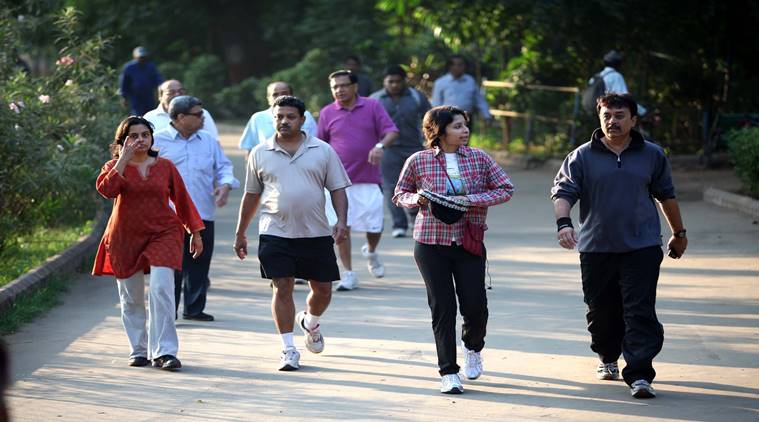
The higher education institutes plan to include fitness in the curriculum. (Express Photo By Bhupindra Rana/ Representational image)

As Prime Minister Narendra Modi is set to announce the Fit India Movement on August 29, the University Grants Commission (UGC) has asked higher educational institutions (HEIs) to motivate staff and students to attempt walking 10,000 steps each on the day and “and follow it up in daily routine”. The commission has also directed institutions to screen the launch event live for faculty and students, while ensuring their attendance.
Advertising

Short video clips of activities held on campus are to be sent to the UGC. The institutes have also been directed to prepare and implement a fitness plan, incorporate sports, exercise, physical activities into the daily routine on campus, as per the latest circular released by the UGC.

The Vice-Chancellors and principals have been directed to upload their respective fitness action plan on the official website and campus notice board within a month. The same has to be uploaded on the UGC’s fitness movement portal. The portal (ugc.ac.in/uamp/), however, is yet to go live.
Advertising

The commission, in an official notice, said, “Universities and affiliated colleges can make well-meaning efforts for the health and well-being of their students, teachers, staff and officials to achieve physical fitness, mental strength and emotional equanimity.”

During his latest Mann Ki Baat — a radio address by the PM — Modi asked people to take part in ‘Fit India Movement’ which is being organised to celebrate the upcoming ‘National Sports Day’ on August 29.