Thursday, August 29, 2019

Young biologist from Andhra Pradesh recreates a blue whale from bones

Complete skeleton formed in Andhra Pradesh using remains of several of the giants washed ashore

It was like a jigsaw puzzle for the young wildlife biologist looking at the skeletal remains of dead blue whales washed ashore on the Andhra Pradesh coast. But he found a way to put them all together. All in just two months. Where the parts were missing, he used plaster of Paris and put in stainless steel and screws to configure a life-size skeleton of the endangered species.

In 2017, Kumpatla Balaji, an Andhra University alumnus, launched a project to use the skeletal remains to form the blue whale, replicating its natural anatomy structure. He was spurred to do so, after experts were unable to fit the bones collected from the Machilipatnam coast.

Mr. Balaji is a research scientist at the Coringa Marine Museum in Rajamahendravaram city, where the 32-ft-long life-size blue whale (Balaenoptera musculus) skeleton he engineered is being preserved and on public display since early 2018.

“Dozens of skeletal remains of blue whales were lying with our museum, begging to be assembled,” said Mr. Balaji.

“Many bones and the head part of the blue whale were brought to our museum by the Forest Department from Machilipatnam coast in 2017, helping me form the complete skeleton within two months,” the research scientist said.

The skeletal parts were chemically treated before being rigged together with stainless steel. “At least two bones were made of plaster of Paris as they were missing.”

The blue whale falls in Schedule I of the Wildlife (Protection) Act, 1972. Dozens of dead blue and sperm whales have washed ashore on the Nagayalanka, Machilipatnam, Kakinada, and Srikakulam coast in Andhra Pradesh since 2015. What caused their death is the subject of study.

Did you know life insurance rules have changed?

On new ULIPs, the minimum sum assured will be less than 10 times the premium

IRDAI (Insurance Regulatory and Development Authority of India) issued a notification on new regulations in ULIPs (unit linked insurance plans) and traditional insurance policies, a few weeks back. Of the several changes, the move to reduce the minimum sum assured (SA) in ULIPs and a guaranteed surrender value for traditional policies from the second year, were prominent.

IT industry on hiring spree, adds record number of employees in Q1

Around 85,000 employees added on net basis, highest in six years

The Indian information technology (IT) industry added a record number of employees in the April-June quarter (first quarter, or Q1) of the ongoing financial year, with around 85,000 new hires. This is the highest-ever net employee addition by the industry in a single quarter in six years, according to a recent report by equity research firm CLSA.

Industry experts are of the opinion that the spurt in recruitment happened as IT services firms went aggressive on hiring in anticipation of a strong demand environment. This was supplemented by healthy hiring in onsite locations, triggered by ...

IIT-Hyderabad develops waterproofing material using fly ash

Stearic acid-coated fly ash surface can be made to behave like rose petals or lotus leaves.

Researchers at the Indian Institute of Technology (IIT) Hyderabad have developed a cheap waterproofing material by coating fly ash, a waste by-product from coal-based thermal power plants, with stearic acid, which is a surfactant. While fly ash is extremely water-loving (hydrophilic), it turns into a highly water-repelling surface once coated with stearic acid.

The stearic acid has a hydrophilic part called the head and hydrophobic portion called the tail. While the head of stearic acid which is hydrophilic binds to fly ash particles, the water-repelling tail remains free. Numerous free hydrophobic tails of stearic acid makes the fly ash surface water repellent.

Fly ash varies in size from 100 nanometres to a few microns and can thus provide surfaces with different roughness based on the size of the particles chosen. The stearic acid-coated fly ash surface can be made to behave like one of the two naturally occurring water-repelling materials — rose petals or lotus leaves — by the varying the surface roughness.


In the case of a rose petal the surface repels the water but at the same time the structure of the petal ensures that the water droplets adhere to it. Thus, even when inverted, water droplets do not fall down. On the other hand, in the case of the lotus leaf, water droplet rolls off easily.

“When we used particles of more or less uniform size, the inter-particle space is more and water penetrates and sticks to the surface like in the case of a rose petal and remains adhered to the surface even when we tilted it to 90 and 180 degrees,” says Dr. Atul Suresh Deshpande from the institute’s Department of Material Science and Metallurgical Engineering and corresponding author of a paper published inChemistry Select.

The topography changes completely when fly ash particles of different sizes are used. The smaller particles tend to fill the gap between the larges ones thus resulting in a tighter packing with very little gap between particles. “Air pockets tend to form when the gap between particles reduces making it difficult for water to get into the gaps. Water droplets are suspended on top of the air pockets and so has less adhesion to the surface. So when the surface is tilted slightly (5 degree) the droplets tend to roll off easily,” says Dr. Mudrika Khandelwal from IIT Hyderabad and a co-author of the paper.

“By using a combination of stearic acid and surface roughness we were able to achieve superhydrophobicity (where the water contact angle is more than 150 degree),” says Urbashi Mahanta, a PhD student from IIT Hyderabad and first author of the paper. “We used a simple process of particle distribution to achieve the two types of hydrophobicity.”

The extent of hydrophobicity increased in both surfaces when the drying temperature was increased from 60 degree C to 80 degree C. The melting point of stearic acid is over 69 degree so when heated to 80 degree C the surfactant melts leading to better coverage and therefore smoother surface compared with samples treated to 60 degree C. Samples with tight and loose packing when treated to 80 degree C showed more hydrophobicity. The stearic acid-coated fly ash can be used as a waterproofing material. Owing to its hydrophobic nature, the surface can be easily cleaned. One can use an adhesive to apply the stearic acid coated fly ash on a surface,” says Dr. Deshpande.

More work is needed to test the mechanical and chemical durability of the fly ash waterproofing material.

Mann Ki Baat: PM calls for mass movement against single-use plastic from Oct 2

In his monthly radio address ‘Mann ki Baat’, the prime minister said when the country observes the 150 birth anniversary of the Father of the Nation, “we will launch a new mass movement against use of plastic”.

Prime Minister Narendra Modi on Sunday urged people to observe the 150th birth anniversary of Mahatma Gandhi this year as a day to make India plastic-free and exhorted municipalities, NGOs and the corporate sector to come up with ways for safe disposal of accumulated plastic waste before Diwali.

The call for a mass movement came days after Mr. Modi’s Independence Day’s address in which he had urged people to shun ‘single-use’ plastic to protect the environment.

In his monthly radio address ‘Mann ki Baat’, the Prime Minister also urged people to participate in the annual ‘Swachhta Hi Seva’ or ‘the quest for cleanliness is service’ campaign, which will begin on September 11 this year.

“This year, on October 2, when we celebrate Bapu’s 150th birth anniversary, we shall not only dedicate to him an India that is open defecation-free but also shall lay the foundation of a new revolution against plastic, by people themselves, throughout the country,” he said.

He said people from all strata of the society should celebrate Gandhi Jayanti this year as a day to make “Mother India plastic-free“.

The Prime Minister urged all municipalities, municipal corporations, district administrations, gram panchayats, government and non-governmental bodies to work towards ensuring adequate arrangement for collection and storage of plastic waste.

“I also appeal to the corporate sector to come out with ways and means for appropriate disposal of all accumulated plastic. It can be recycled; it can be transformed into fuel. This way we can accomplish our task of ensuring safe disposal of plastic waste before this Diwali,” he said.

Diwali festival this year falls on October 27.

He said all that is required to take up the challenge is resolve and “what can be a greater inspiration than Gandhi?”.

In his Independence Day’s address, Mr. Modi had urged citizens to eliminate ‘single-use’ plastic and suggested that shopkeepers provide eco-friendly bags to customers.

“This campaign has enthused people ... Many of my merchant brothers and sisters have put up a placard at their establishments, boldly mentioning that customers ought to carry shopping bags with them. This will result in monetary savings as well as one would be able to contribute towards protection of the environment,” he said.

MSU accepts UGC changes for PhD

UGC plans panel to shape anti-bullying policy in schools and colleges

A government official said on condition of anonymity that the panel will prepare draft amendments to existing anti-ragging regulations to add ways to curb bullying and also prepare an action plan to implement them.
The University Grants Commission (UGC) plans to form a high-powered panel to suggest norms to curb bullying in colleges and universities and to come up with an implementation plan. (HT FILE)

India may soon have an anti-bullying policy in schools and colleges to combat a menace that is increasingly rearing its head in schools and colleges across India, especially with students from diverse social and economic backgrounds increasingly studying together.

The policy will be framed for colleges first. The University Grants Commission (UGC) plans to form a high-powered panel to suggest norms to curb bullying in colleges and universities and to come up with an implementation plan to put them into practice, according to an order the higher education sector regulator issued recently in this regard.

A government official said on condition of anonymity that the panel will prepare draft amendments to existing anti-ragging regulations to add ways to curb bullying and also prepare an action plan to implement them.

A second official who asked not to be named said the recommendations will also be passed onto the HRD ministry’s school education department for the implementation of the norms in schools.

“The UGC has come up with elaborate regulations as far as ragging is concerned. However, bullying is another problem that silently makes the education experience a nightmarish experience for many,’’ a third ministry official said on condition of anonymity.

Globally 32% of all students aged 13-17 years had been bullied at school in the month preceding the publication of a United Nations Educational, Scientific and Cultural Organisation (UNESCO) report on bullying in February. According to UNESCO, bullying is the most common example of school violence and includes physical, psychological and sexual violence. It found frequently bullied students are nearly three times more likely to feel like outsiders, and are more than twice as likely to miss school.

The Teacher Foundation, a non-profit trust promoting the development of schools and educators in India, studied bullying between 2013 and 2017 across 15 Indian cities and found that 42% students in classes 4-8 and 36% in classes 9-12 reported it.


One of the officials cited above said the decision to form the panel was taken at an inter-council meeting of HRD ministry, UGC, Central Board of Secondary Education and National Council of Educational Research and Training (NCERT) and other officials in May this year.

According to the order cited above, UGC chairman D P Singh has formed the panel under the leadership of Sushma Yadav, who is a UGC member and Sonepat’s BPS Mahila Vishwavidyalaya vice-chancellor.

HT has accessed a copy of the order, which said the panel would include representatives from NCERT, CBSE, HRD ministry and All India Council for Technical Education.

The third official cited above said ragging is an issue that emerges at the time of admissions in colleges, but bullying, while invisible sometimes, is as prevalent a problem, and probably not even time-specific.

“Moreover, apart from a senior student intimidating junior ones, there can be issues which are region-specific or are linked with social realities. The committee will examine the issue of bullying from all aspects,” the official said.

“Though at the Higher Education admission stage the UGC has very stringent anti Ragging Regulation the same is missing at the school level. It is a well known fact that some senior school students are great bullies. School students are in a very wide age spectrum. They enjoy sadistic pleasure in harassing their juniors which are far younger than them. Therefore this UGC initiative is very timely,” said eminent educationist Prof Inder Mohan Kapahy.

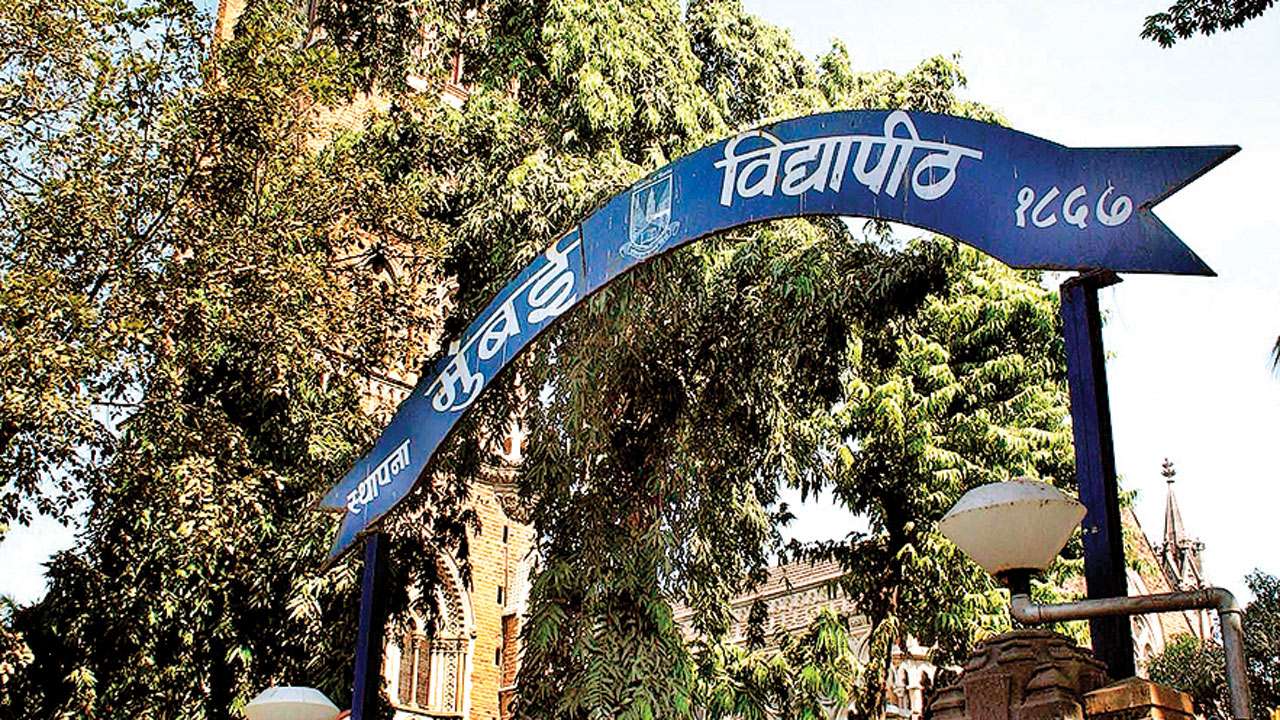
UGC notice to University of Mumbai over blind eye to 'plagiarism' woes

Students feel the varsity is stimulating the 'copy-paste' culture among the students by not abiding the UGC policies.


Mumbai University

In May this year, the University Grants Commission (UGC) had sent a notice to the University of Mumbai (MU) regarding detection and prevention of plagiarism manual. This letter was in response to a complaint sent by a PhD student of the varsity, citing the problems students are facing when it comes to writing and preserving their thesis or dissertation. However, as per Shodhganga – a digital repository of the thesis by UGC – from the year 2010-18, MU has uploaded only 122 total thesis meanwhile Savitribai Phule Pune University in the same period has uploaded 1,243 thesis.

Students feel the varsity is stimulating the 'copy-paste' culture among the students by not abiding the UGC policies.

"Technically, if you upload a thesis on Shodhganga, if it has any plagiarized substance in it, it will draw a red line on it which will refrain from completing the uploading process," a senior professor and a PhD holder explained. She continued, "However since this isn't existing, students will be free to copy and paste just for the sake of completing their thesis or dissertation."

UGC's anti-plagiarism policy allows up to 10 per cent content similarity or reference from elsewhere in their thesis. Anything exceeding it will be asked to withdraw from the manuscript. "My dissertation must be lying around somewhere and I wouldn't even know if it's being copied by somebody else. In case I need it in the future, nobody will even believe if I had written in because there won't be any authenticity," a student told DNA on the condition of anonymity.

Ravindra Kulkarni, pro-Vice Chancellor of MU while said, "The library and the thesis section at the university have limited manpower and only a couple of anti-plagiarism software. In order to resolve this, the existing Thesis Section is being converted into a department and will be shifted from the Fort campus to Kalina campus." He also said that henceforth every work attached to the thesis and dissertation will be completed with a year.

Online ArchiveA thesis uploaded in Shodhganga, a digital repository, is considered authentic, and students bear a ‘certification of originality’ by University Grants Commission

Wednesday, August 28, 2019

UGC asks all faculty, students to walk 10,000 steps as PM Modi to launch Fit India movement


The higher educational institutes have been directed to prepare and implement a fitness plan, incorporate sports, exercise, physical activities for fitness into the daily routine.

The higher education institutes plan to include fitness in the curriculum. (Express Photo By Bhupindra Rana/ Representational image)

As Prime Minister Narendra Modi is set to announce the Fit India Movement on August 29, the University Grants Commission (UGC) has asked higher educational institutions (HEIs) to motivate staff and students to attempt walking 10,000 steps each on the day and “and follow it up in daily routine”. The commission has also directed institutions to screen the launch event live for faculty and students, while ensuring their attendance.
Advertising

Short video clips of activities held on campus are to be sent to the UGC. The institutes have also been directed to prepare and implement a fitness plan, incorporate sports, exercise, physical activities into the daily routine on campus, as per the latest circular released by the UGC.

The Vice-Chancellors and principals have been directed to upload their respective fitness action plan on the official website and campus notice board within a month. The same has to be uploaded on the UGC’s fitness movement portal. The portal (ugc.ac.in/uamp/), however, is yet to go live.
Advertising

The commission, in an official notice, said, “Universities and affiliated colleges can make well-meaning efforts for the health and well-being of their students, teachers, staff and officials to achieve physical fitness, mental strength and emotional equanimity.”

During his latest Mann Ki Baat — a radio address by the PM — Modi asked people to take part in ‘Fit India Movement’ which is being organised to celebrate the upcoming ‘National Sports Day’ on August 29.

Tuesday, August 27, 2019

UGC's 'Paramarsh Scheme' gets 100 university proposals

The University Grants Commission (UGC) has received more than 100 proposals from universities for its 'Paramarsh Scheme'.

The University Grants Commission (UGC) is expecting to receive around 100 proposals from the higher education institutions for its 'Paramarsh Scheme'. As a part of the scheme, top institutions will mentor five non-accredited institutes to secure National Assessment and Accreditation Council (NAAC) grade.
"The last date for submitting proposals by the mentors is September 2. These will then be examined," a UGC official said here on Monday.
"Once the proposals are accepted by the UGC, the institutes can start the mentoring programme within a month," the official added.
The scheme mandates that the mentor institutions should have secured a NAAC score of 3.26 out of 4. Human Resource Minister Ramesh Pokhriyal 'Nishank', who launched the scheme last month, said it would improve quality and standards of higher education in the country.
The official noted that since securing NAAC accreditation has been made mandatory for the open universities too, the top institutions can also mentor open universities which will be applying for NAAC grade for the first time.
How 'Paramarsh' scheme is useful:
Under the 'Paramarsh' scheme, the leading institutions will provide regular mentoring to help colleges to get accredited by the NAACA.
The mentor institutions can be provided financial assistance of up to Rs 30 lakh. There is also an option of appointing an expert, who can be paid a fellowship amount of Rs 31,000 per month.
The scheme aims to improve the global rankings of Indian higher educational institutions.
"The scheme will lead to enhancement of the mentee institutions' quality and its profile as a result of improved quality of research, teaching and learning methodologies. The mentee institution will also have increased exposure and speedier adaptation to best practices," the official added.

About NAAC
The NAAC is an autonomous body that assesses and accredits higher education institutions in the country.

Source: https://www.indiatoday.in/education-today/news/story/ugc-s-paramarsh-scheme-gets-100-university-proposals-1591812-2019-08-26 (Accessed on August 27, 2019)

Engineering colleges need to reinvent to be relevant

Engineering colleges need to reinvent to be relevant


Read more at:
http://timesofindia.indiatimes.com/articleshow/70839936.cms?utm_source=contentofinterest&utm_medium=text&utm_campaign=cppst (Accessed on August 27, 2019)

Monday, August 26, 2019

UGC on a cleansing process in research sector

Bogus journals, substandard PhD theses under the scanner

The University Grants Commission (UGC) is on a cleansing process against bogus journals and substandard PhD theses as the quality of our research sector has been eroding, UGC vice chairman Bhushan Patwardhan has said.

Speaking on the sidelines of a symposium on ‘Research in Ayurveda: Need, scope and future’ organised by AMMOI (Ayurvedic Medicine Manufacturers Organisation of India) here on Sunday, he said the quality of research papers had been eroding in the country, especially over the past 10 years.

“The UGC has appointed a 20-member committee headed by Padmanabhan Balram, former director, Indian Institute of Science, Bengaluru, to review the research papers approved by the UGC in the last 10 years. The committee has been given six months to review the situation. At least we will know where we stand and how much damage has been done to the research sector,” he said.

To check the umpteen dubious journals that publish papers with vested interests, the UGC has published a list of approved journals, Mr. Patwardhan said. We have requested the universities and institutions to consider only papers that appeared in the journals listed by us while deciding on faculty appointments. They have been asked to go by quality, not quantity,” he said.
Credit bank

‘National Academic Credit Bank’ (NAC bank), is another revolutionary step to be taken by the UGC in the higher education sector in near future. “It will make the inter-university degrees a reality in the country. The NAC bank would allow the students to join one university, pursue courses in another university, and earn the degree from yet another one. This student-centric system, already exiting in foreign universities, will bring lots of flexibility to the students,” Mr. Patwardhan said.

Speaking about STRIDE (Scheme for Trans-disciplinary Research in India’s Developing Economy), Mr. Patwardhan said the objective of the system was to improve collaboration among various stakeholders in the research sector for the benefit of society.

UGC to decide on proposals to review PhD theses soon

UGC to decide on proposals to review PhD theses soon


Read more at:
http://timesofindia.indiatimes.com/articleshow/70833071.cms?utm_source=contentofinterest&utm_medium=text&utm_campaign=cppst (Accessed on August 26, 2019)

The top Indian colleges and organisations for internships, awarded by AICTE

Online learning platform Internshala together with All India Council of Technical Education (AICTE) organized a national event, on Sunday to celebrate Internship Day 2019 .

The initiative was to honor the colleges and organizations with the best boarding culture.

The top three organizations include the Times Internet, Out of the Box Solutions and today's Kalam Foundation, a voluntary organization working to reform education.

According to Internshala, over 15,000 students received boarding opportunities in the last four months.

Varsities, colleges asked to ready fitness plan for students

Varsities, colleges asked to ready fitness plan for students ..


Read more at:
http://timesofindia.indiatimes.com/articleshow/70822789.cms?utm_source=contentofinterest&utm_medium=text&utm_campaign=cppst (Accessed on August 26, 2019)

IIT Bombay Sets New Trend For Convocations: Students Go Traditional With White Kurta Pyjamas Ceremonial Robes

Indian Institute of Technology (IIT) Bombay students decided to go traditional during their convocation by ditching the ceremonial black robe along with headgears and wearing white kurta pyjamas on Saturday (10 August), Livemint reports.

The University Grants Commission (UGC) told vice-chancellors of all universities to adopt “ceremonial robes made out of handloom fabrics which would not only give a sense of pride of being Indian but also be more comfortable in hot and humid weather”.

Infosys chairman and co-founder Nandan Nilekani and an alumni of the institute was conferred an honorary doctoral degree by the institute. Minister of Human Resource Development Ramesh Pokhriyal was the chief guest of the 57 convocation .

2,603 students, 385 PhDs, and two joint PhDs of IIT-B/National University of Singapore and one Cotutelle PhD (Joint Supervision) agreement with the Université du Québec à Trois-Rivieres in Canada were awarded by the minister.

Friday, August 23, 2019

Microsoft joins Google, Intel for data protection consortium

Google ditches dessert names, announces Android Q will be officially called Android 10

On Thursday Google announced that new Android version or Android Q will be officially known as Android 10. Yes, for Android Q Google changes its naming strategy and this comes as a surprise for most people. In addition, Google has also changed the look of the Android logo.

Read the full article at:

More than 700 German research institutions strike open-access deal with Springer Nature

BERLIN—A consortium of more than 700 German research institutions and libraries today announced an agreement with publisher Springer Nature to make it simpler for authors to publish their papers open access. The agreement is the largest national open-access deal to date, but it doesn’t allow authors to publish open access in Nature or its sister journals.

The consortium, called Project DEAL, has negotiated for more than 3 years with major publishers to reach “publish and read” agreements. Such agreements give member institutions full access to a publisher’s online content and make papers that their researchers publish freely available worldwide. Charges are based not on subscriptions, but on a fee per published paper.

Read the full article at:

How much research output from India gets social media attention?

Abstract

Scholarly articles are now increasingly being mentioned and discussed in social media platforms, sometime seven as pre- or post-print version uploads. Measures of social media mentions and coverage are now emerging as an alternative indicator of impact of scholarly articles. This article aims to explore how much scholarly research output from India is covered in different social media platforms and how similar or different it is from the world average. It also analyses the disciplinewise variations in coverage and altmetric attention for Indian research output, including a comparison with the world average. Results obtained show interesting patterns. Only 28.5% of the total research output from India is covered in social media platforms, which is about 18% less than the world average. ResearchGate and Mendeley are the most popular social media platforms in India for scholarly article coverage. In terms of discipline-wise variation, medical sciences and biological sciences have relatively higher coverage across different platforms compared to disciplines like information science and engineering.

Read the full text paper at:
https://www.currentscience.ac.in/php/forthcoming/pdf/GA34374.pdf (Accessed on August 23, 2019)