Wednesday, January 22, 2025

Kolkata’s ‘boi mela’: India’s oldest book fair inspired by the Frankfurt tradition

Since India’s first-ever book fair was held in 1918 in the city, the Kolkata Book Fair has grown in both scale and significance.

At book fairs, one can see people strolling from one stall to another, searching for author-signed copies, unique covers, classic editions, and perhaps a tempting 10 per cent discount. For book lovers, it is a magical time of the year when book fairs spring up across the country, including Kolkata.

The boi mela, or book fair, holds a uniquely special place in the hearts of Bengalis. More than just a marketplace for books, it is deeply rooted in the city’s legacy of reading, intellectual exchange, and knowledge-sharing. Moreover, Kolkata boasts the honour of hosting the country’s oldest book exhibition, a cornerstone of its vibrant cultural landscape.

Origins of book fair in Colonial India

In their 2021 work Anthology of Significant Events in Indian Art & Socio-Cultural History 1850-2015, Roop Narayan Batham and Nimisha Kesarwani highlight that India’s first-ever book fair was held in 1918 at College Street in Calcutta, as the city was known then. The event at the heart of West Bengal’s educational and publishing industry was overseen by prominent figures such as Rabindranath Tagore, Lala Lajpat Rai, Gurudas Banerjee, Bepinchandra Pal, and Aurobindo Ghosh, among others.
Advertisement

Organised by the National Council of Education (NCE), which referred to the event as a book exhibition, the fair took place at the site where Goenka College of Commerce stands today in Bow Bazar, a locality in central Kolkata. Founded in 1906, NCE emerged in response to the British decision to divide Bengal. It was among the first institutions to promote the ‘Make in India’ initiative, aiming to provide scientific and technological education to youth as part of the broader Swadeshi movement. NCE sought to demonstrate that India was capable of offering modern education independently, countering colonial authority.

The book fair proved to be a source of inspiration for several notable figures, including economist Benoy Kumar Sarkar, who, in the 1940s, published works like Education for Industrialisation.


New era of Indian publishing

In the early 1970s, a group of literature enthusiasts, mostly publishers, frequently met at the Coffee House on College Street to discuss the Frankfurt Book Fair. Inspired by this commercial event, they envisioned creating a similar fair in Kolkata, hoping to provide a space for book lovers to share ideas and boost the local publishing industry.

“After two or three years of discussion,” says Arabinda Das Gupta, owner of the 137-year-old bookstore Das Gupta and Company on College Street, “the idea took shape in 1975, aiming to bring both domestic and foreign publishers to the city.”
Advertisement

In 1976, 34 publishers set up 56 stalls near the iconic Victoria Memorial. Inaugurated on March 5, the 10-day event, which concluded on March 14, drew book lovers who paid a 50 paisa entry fee. The fair’s success in its inaugural year highlighted the need for a larger venue.

In 1982, Peter Withers, director of the Frankfurt Book Fair, visited Kolkata, and by 1983, the Kolkata Book Fair received its first international accreditation. As the fair expanded, it moved to the spacious Maidan grounds in central Kolkata to accommodate the growing number of publishers.
More from Express Research | Snehalata Mukhopadhyay: The teen whose dowry death shook 20th-century Bengal into action

In 1997, tragedy struck when a devastating fire destroyed 100,000 books, causing significant losses. “We lost books worth 80,000 that year,” recalls Das Gupta. However, the venue was reconstructed in just three days, and the fair resumed. The following year, heavy rain caused further damage to books, although insurance covered the publishers’ losses.

Despite these setbacks, the fair demonstrated remarkable resilience. 1999 marked a significant milestone, with Bangladesh as the theme and a visit from Sheikh Hasina, the then prime minister of the neighbouring, who returned to Kolkata after 27 years.

Over the years, the Kolkata Book Fair has grown in both scale and significance, evolving into a major cultural hub in South Asia and beyond. It continues to attract large audiences and expand its influence year after year. This year, the fair will highlight Germany as the country of focus.

Under Trump, US withdraws from WHO: Impact, what this means for India

Donald Trump withdraws US from WHO: Why did Trump walk out of the WHO? How much of the agency's funding came from the US? What happens to US experts working on the WHO's schemes? We explain.
United States President Donald Trump signed an executive order to withdraw from the World Health Organisation (WHO) on his very first day in office. The order said the reasons for withdrawing were WHO’s “mishandling of the COVID-19 pandemic”, “failure to adopt urgently needed reforms”, “inability to demonstrate independence from the inappropriate political influence of WHO member states”, and for continued demand of “unfairly onerous payments from the United States.”

Tuesday, January 21, 2025

Surge in NEET-UG cut-off marks: More students option for Indian medicine courses in 2024

TNN | Jan 21, 2025, 12.54 PM IST

CHENNAI: Gaining admission to undergraduate courses in Indian medicine and homeopathy was tougher this year as the NEET-UG cut-off - the marks of the last student to enter the course - rose by an average of 100 marks in most categories, and by up to nearly 300 marks in select categories.


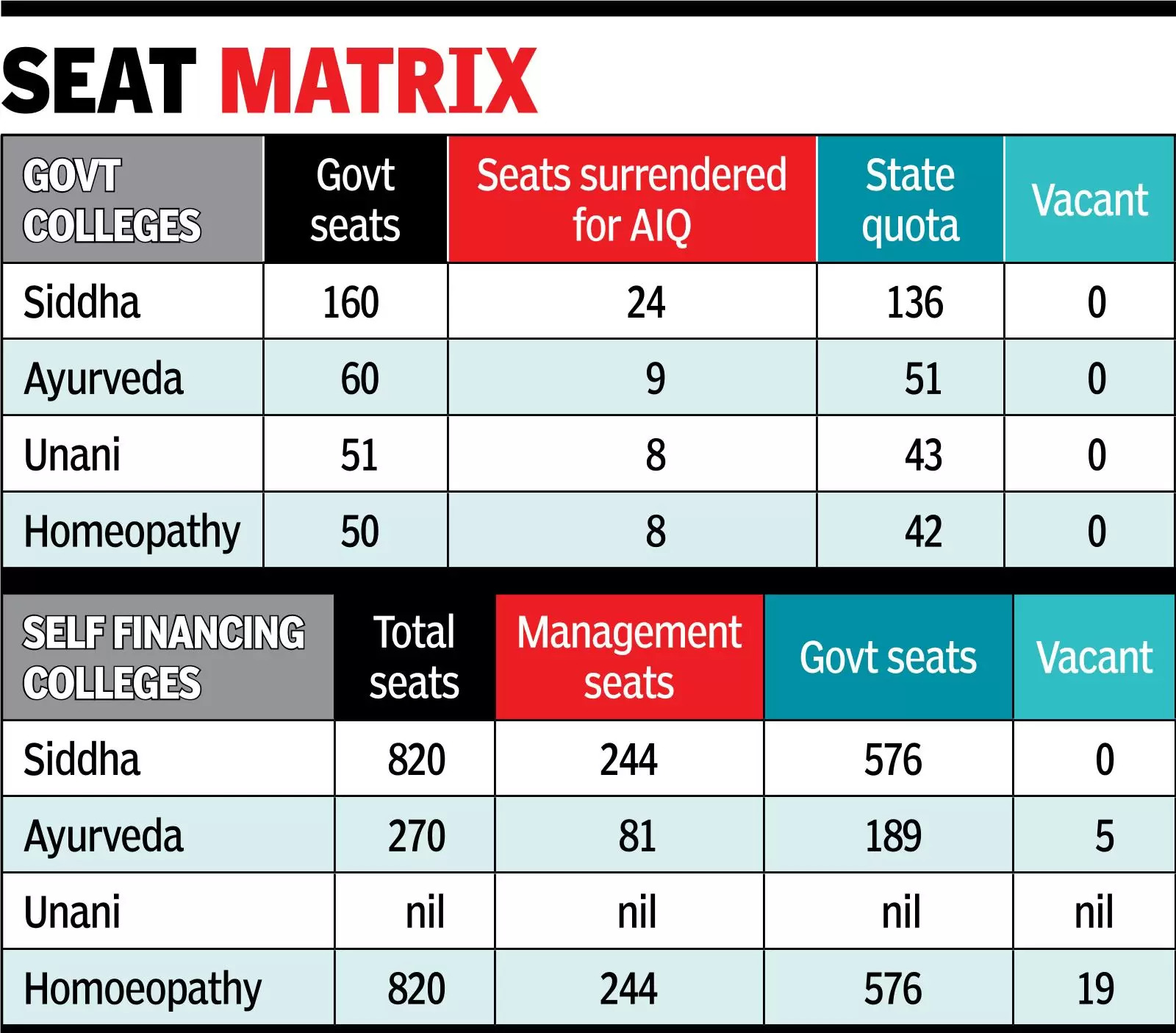
While all seats in undergraduate courses for unani and siddha across colleges were taken, five in ayurveda and 19 in homeopathy were vacant after nearly five rounds of counselling, officials at the selection committee for Indian medicine said.

The committee admits students to ayurveda, siddha, unani and homeopathy courses based on merit in NEET scores and the rule of reservation. "This year, we saw an increase in students interested in these courses," said committee secretary Dr M Krishnaveni. The top student to join the bachelor's course in siddha medicine had a NEET score of 592/720. The score was 585 for ayurveda, 551 for unani and 547 for homeopathy.
These students weren't exceptions, Krishnaveni said. "The difference in marks wasn't huge."
‘Offers galore for Ayush’

Krishnaveni said the last candidate to join siddha had a score of 539. “Barring unani, where the cut-off was 433, all others had a cut-off above 500,” she said. In 2023, the cut-off for siddha was 423, followed by 412 for ayurveda and 405 for homeopathy. The unani cut-off was 231 in 2023 compared to 433 in 2024. Barring unani, the cut-off for all courses in reserved categories was above 400 this year, while students with scores as low as 120 joined these courses last year.

Experts say the rise in cutoffs was expected as the MBBS cut-offs have increased several fold over the past few years. In 2024, the cut-off for MBBS in the general category for govt medical colleges was 650, while for self-financing colleges it was above 600. In reserved categories, it was around 470. “Many students who have written NEET-UG several times are tired. They don’t want to wait and try another year as it gets tougher with each passing year,” said Manickavel Arumugam, who counsels students.

Students and parents agree. “My nephew missed MBBS by two marks. He passed out in 2020 and most of his friends have graduated. We know we can’t afford to pay fees in private colleges. So, he decided to join siddha this year,” said Rajkumar E, who works for a pharmaceutical company. “Many AYUSH graduates now have offers from clinics, pharma companies and govt,” he said.

IIT-M admits five athletes under new sports quota

This initiative is offered through two supernumerary seats in each of its undergraduate programmes for Indian nationals, of which one will be reserved for female students.

CHENNAI: The Indian Institute of Technology (IIT) Madras has admitted five athletes with national accomplishments under its ‘Sports Excellence Admission’ (SEA) category for the academic year 2024-25, according to an official statement.

In February 2024, IIT Madras became the first IIT in the country to introduce admissions for athletes under the SEA category in its undergraduate programmes. This initiative is offered through two supernumerary seats in each of its undergraduate programmes for Indian nationals, of which one will be reserved for female students.

The five students who have been selected for admission at IIT Madras are: Arohi Bhave (volleyball) from Maharashtra, admitted into BS (medical sciences and engineering); Aryaman Mandal (water polo and swimming) from West Bengal, admitted into BTech (computer science and engineering); Nandini Jain (squash) from Delhi, admitted into BTech (computer science and engineering); Prabhav Gupta (table tennis) from Delhi, admitted into BTech (artificial intelligence and data science) and Vangala Vedavachan Reddy (lawn tennis) from Andhra Pradesh, admitted into BTech (artificial intelligence and data science).

“Sports Excellence Admission is an initiative of IIT Madras primarily to send the important message that children must be encouraged to play. I sincerely hope this reaches everyone,” said V Kamakoti, director of IIT Madras.

Monday, January 20, 2025

Held hostage by H-1B visa system, Indians show signs of depression, anxiety

From signs of depression and anxiety to not being able to visit their parents, some Indian H-1B visa holders took to social media to discuss how their lives have been hit by uncertainties. They might have to deal with the impact of H-1B visa curbs after US President-elect Donald Trump's inauguration on January 20.
Stability, a sense of security and hopes for the future, all go for a toss for H-1B visa holders in the US and those in the long queues for Green Cards. The H-1B visas, temporary visas for highly skilled foreign nationals in the US, also come with worries about paying the next bill, finding employment in 60 days if one loses their job and trying one's best to stay in the US and realise the American dream. Though Indians dominate the H-1B visa programme, with 72% of H-1B visas held by Indians, it comes at a cost.

With 2.7lakh scanned pages, archival project led by IITBombay on Narayana Guru to go online this May

A massive digitisation project undertaken by the Indian Institute of Technology (IIT), Bombay, in association with the Sree Narayana Mandira Samity (SNMS), Mumbai, will give a peep into the life of Sree Narayana Guru, who paved the way for a modern Kerala during the end of the 19th and the early part of the 20th century. The archive project, titled Narayana Guru Digital Research Resource Platform (NGDRRP), which began in 2023, will be fully available online this May. Siby K. George, Professor of Philosophy, IITBombay, and principal investigator of the project, said, ‘‘Detailed academic studies, especially in English, on Sree Narayana Guru are hardly available. 
The digital archive project is expected to solve this issue as over 2.7lakh pages have now been scanned and hosted on the platform.” According to Girija K.P., consultant and project coordinator who coordinated the digitisation and groundlevel work, the objective of the project is to compile, sort, classify, vet, and digitise literature on Sree Narayana Guru, currently scattered among individuals and institutions and unavailable to researchers, and to create a credible and systematic archive. It also aims to make available previously inaccessible materials, including magazines published during the Guru’s time. These materials may assist researchers and proponents of the Guru in gaining a deeper understanding of his multifaceted personality, Ms. Girija said. 
The scope of the project involved digitising extensive materials collected from the private collection of individuals such as G. Priyadarsanan at Varkala, public libraries, and personal collections of Guru’s disciples and followers. 
The documents will be launched in collaboration with the South Asian Open Archives. Some magazines (24 issues of Dharmam and 71 issues of Mithavadi) have been launched this month, said Pradeep Kumar P.I., Professor of Chemistry, IITBombay, and coprincipal investigator. Anish Damodaran of the SNMS, which funded the ₹42lakh project, said that to chronicle the history of modern Kerala, a comprehensive archive of Sree Narayana Guru was imperative. This forced the outt to take up the project with the IITBombay, he said.

Source: https://www.pressreader.com/india/the-hindu-erode-9WW6/20250120/281775634821359 1/1


https://www.pressreader.com/india/the-hindu-erode-9WW6/20250120/281775634821359

How is TRAI and the govt. combating spam? | Explained

How will blockchain technology effectively counter spam? What are some of the steps being taken by the government against unsolicited commercial communications? Have some of the measures already taken been effective against unwanted calls and messages? What is a do-not-disturb registry?

The story so far: The Telecom Regulatory Authority of India (TRAI) will be using distributed ledger technology (DLT) to register spam preferences from customers, TRAI chairman Anil Kumar Lahoti said. Spam rules will be tightened to make commercial messages traceable, the TRAI has indicated.

What is TRAI’s role in fighting spam?

The TRAI regulates the telecom industry, and its main role is in regulating Unsolicited Commercial Communications (UCC), the official name for spam. Starting in 2007, the regulator implemented a do-not-disturb (DND) registry, which would force telemarketers to abide by customer preferences when it came to commercial calls.

If a telecom customer signs up to the DND registry, they are not supposed to get any spam calls or SMS messages.

TRAI had also worked with an external agency to develop a DND app, which would allow customers to register their DND preference, and accept complaints. Under the Telecom Commercial Communication Customer Preference Regulation (TCCCPR), 2018, telemarketers who called or sent messages to DND-registered customers would receive warnings, and if enough warnings accumulated, they would be blacklisted from sending messages to telecom operators.

The DND app has not always been maintained by the TRAI, and was briefly unavailable from 2022 onwards. An SMS reporting facility where users would have to report messages in a particular format was available, but further steps were taken to make the process more user friendly. In 2024, TRAI mandated that DND reporting be made available on every telecom provider’s app.
What role does blockchain play?

In order to fight the deluge of spam messages, TRAI mandated in the TCCCPR that telcos use a blockchain ledger, also known as a distributed ledger, in order to store a constantly-updated list of approved senders of SMS messages. Telcos would also be required to approve specific formats of messages. For instance, an OTP message that goes, “Your OTP is 433212,” would be stored in the blockchain as “Your OTP is …” with space for a variable. These messages have been required to be sent from sender IDs, and not phone numbers.


This has been one of the most stringent rules that have been issued to fight SMS spam anywhere in the world. Blockchain as a technology allows for so-called immutability, which means that every stakeholder involved in a transaction has a reliable, un-tamperable version of the same data. At the time of the 2018 regulations, the necessity to use blockchain for the purpose of maintaining a spam exemption database was debated, as enthusiasm about the technology’s potential had spilled over beyond cryptocurrencies, where it continues to be a mainstay.

In 2024, the regulations were tightened to ensure “traceability” of messages, thus making sure that telcos would have a complete record of who issued a message before it is sent to an SMS gateway. This was aimed at plugging a crucial flaw in the system that would allow anyone to register on the blockchain solutions implemented by telecom operators and send out fraudulent or spam messages in spite of the systems in place to combat them. These, Mr. Lahoti has said, will be further tightened in the coming year.
Have these measures been effective?

For those who have registered their DND preferences, communications from legitimate businesses that follow the rules may have reduced. However, spam has a constantly changing character. While much of spam is merely commercial messages that may be annoying but harmless, the wave of digitisation has increased incentives to get around the protections against commercial messaging and calling. A wave of fraudulent calls have also emerged, with cyber frauds seeking to ensnare Indians in financial scams. Many of these operations are done outside the framework of SMS sender IDs, and are run through disposable 10-digit phone numbers, making it hard for real-time enforcement of anti-spam regulations.

There is also the issue of spam and scam calls from international numbers, which can be leased from certain online Voice over Internet Protocol (VoIP) providers, but appear as legitimate international call traffic.

Which are the other steps taken by the government to end spam?

The Department of Telecommunications (DoT) has launched the Sanchar Saathi portal, which has a reporting site called Chakshu. DoT has partnered with law enforcement, banks, and other stakeholders in order to accept reports of “suspected fraudulent” calls and messages, and has moved to cancel lakhs of numbers that are associated with unauthorised telemarketers and scammers.

It also set up the Telecom Security Operation Centre at its New Delhi headquarters to monitor suspicious internet traffic in real time. Meanwhile, firms like Airtel have taken steps to declare suspicious calls using Artificial Intelligence as “Suspected Spam,” a move that is being replicated by other telcos as well. The telco has also started labelling international calls on smartphones.