Friday, January 24, 2025

IISc Bengaluru enters top 100 club in computer science category: THE World Rankings by Subject 2025

Massachusetts Institute of Technology and Stanford University from the United States top three each of 11 separate subject rankings.

This is the first time an Indian higher education institution, the Indian Institute of Science (IISc), has secured a place among the top 100 universities in the World University Rankings by subject. 

Times Higher Education World University Rankings by Subject 2025: The Times Higher Education (THE) has released the World University Rankings by Subject 2025 with the Indian Institute of Science (IISc) Bengaluru, the lone Indian institute securing a spot in the world’s top 100 institutions offering computer science.

This is the first time an Indian higher education institution has secured a place (99 rank) among the elite top 100 universities in the World University Rankings by subject. In the ranking released last year, IISc led Indian universities by achieving a slot in the 251-300 band.

Delhi University (DU), ranked in the 301-plus band, is the only Indian university to secure a place among the world’s top universities for law and psychology.

Under the World University Rankings by Subject, 11 categories were taken: arts and humanities, business and economics, computer science, education studies, engineering, law, life sciences, medical and health, physical sciences, psychology, and social sciences.

Key highlights of the World University Rankings

— In the field of computer science, 53 Indian universities have secured spots in the world’s top institutions, up from 47 in 2024, with IISc attaining the 96th position.

— The top spot is given to Oxford University followed by the University of Cambridge, and the Massachusetts Institute of Technology.

— In business and economics subjects, 24 Indian higher education institutions have made it to THE’s top universities list this year, compared to 15 in 2024.

— This year, institutes like Amity University, Noida; KIIT University, Bhubaneswar; the University of Petroleum and Energy Studies (UPES), Dehradun; and Delhi University (DU), have secured spots in the list with a rank band of 401–500.

— Saveetha Institute of Medical and Technical Sciences in Chennai ranked in the 251-300 band, leads among 28 Indian institutions recognized as some of the world’s top universities for medical and health subjects.

— For arts and humanities, both Jawaharlal Nehru University (JNU) and Delhi University (DU) have improved their rankings from last year’s 501–600 band to the 401–500 band.

— Moreover, West Bengal’s Jadavpur University has entered the rankings for the first time, securing a position in the 601+ band.
Advertisement

— In social sciences, 14 Indian universities have retained their positions among the world’s top institutions for 2025, consistent with last year’s performance.

Massachusetts Institute of Technology and Stanford University from the United States top three each of 11 separate subject rankings.

Phil Baty, THE’s chief global affairs officer, said: “While the western world continues to dominate the subject rankings, this new data release
demonstrates the continued rise of China and east Asian nations in the global knowledge economy, and a global levelling up of excellence.”

Additionally, the Stanford, Harvard and Cambridge universities are the only institutions that are represented in the top 10 universities across all 11 subjects in the report. It is also important to note that the US dominated the top 10 list across all the subjects and is also the most represented country for each subject in the overall analysis of the report.

Thursday, January 23, 2025

CoRover.ai is Elevating Enterprises with Generative AI-Powered Human-Centric Conversational AI Platform, Impacting 1 Billion+ Lives

CoRover has launched its own Indigenous Large Language Model (LLM), BharatGPT. BharatGPT is integrated for voice modality in more than 14 Indian languages & 22 languages for text modality, in partnership with BHASHNI, a National Language Translation Mission (NLTM) under The Ministry of Electronics and Information Technology (MeitY). CoRover, the world’s first and the highest ROI-delivering human-centric conversational AI platform, also has Generative AI capabilities. It provides all the required features needed to build and manage Chabot’s across communication channels like dialogue/conversation management tool.

CoRover, the world’s first and the highest ROI-delivering human-centric conversational AI platform, also has Generative AI capabilities. It provides all the required features needed to build and manage Chatbot’s across communication channels like dialogue/conversation management tool.

ChatGPT vs DeepSeek AI: Aravind Srinivas pledges $1 million to ‘make India great again’

Perplexity AI CEO Aravind Srinivas is focusing on India's AI goals, committing $1 million and 5 hours weekly to support the initiative. He emphasizes the importance of a dedicated team and plans to invest an additional $10 million if they surpass DeepSeek R1 benchmarks.

Aravind Srinivas, CEO of Perplexity AI, has recently stepped up his focus on India's AI ambitions and has now pledged to invest $1 million and 5 hours a week to help the country achieve greatness in AI.

In a post on X (formerly Twitter), Srinivas wrote, “I am ready to invest a $1mm personally and 5 hours/week of my time into the most qualified group of people that can do this right now for making India great again in the context of AI. Consider this as a commitment that cannot be backtracked. The team has to be cracked and obsessed like DeepSeek team and has to open source the models with MIT license.”

“And beating DeepSeek R1 on all benchmarks with rigor will mean I will invest $10mm more.” the Perplexity AI CEO added.

What is Srinivas proposing?

Srinivas wrote a series of posts on Tuesday, starting with criticizing Infosys co-founder Nandan Nilekani's stance that India should ignore building large language models (LLMs) in favour of building compute, infrastructure and AI cloud.

The Perplexity AI CEO said that Nilekani is “wrong on pushing Indians to ignore model training skills and just focus on building on top of existing models. Essential to do both.”

He later went on to add that India has fell in a trap thinking that AI models would take a lot of money to train but the recent landmarks of China's DeepSeek AI reveal that's not the case. Srinivas also wished that India changes its stance on AI models and focuses on building “muscle to train their models that are not just good for Indic languages but are globally competitive on all benchmarks”.

The Indian-born entrepreneur noted that while he is not in a position to run a DeepSeek-like the company, he is happy to help anyone “obsessed enough to do it and open-source the models.”

Maharashtra’s ‘honey village’ to feature in Republic Day event but its makers in Manghar feel left out without invitation

Maharashtra’s ‘honey village’ to feature in Republic Day event but its makers in Manghar feel left out without invitation
To pacify the disappointed villagers, officials say they can attempt to set up a meeting with Prime Minister Narendra Modi.Written


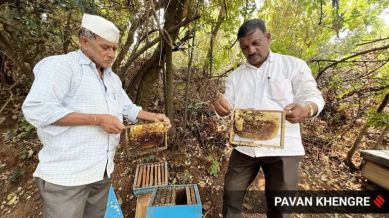
Residents of the Mangar village who practice beekeeping. (Express photo by Pavan Khengre)

Maharashtra will display a tableau featuring its ‘Madhache Gaav’ (honey village) project in New Delhi as part of the Republic Day celebrations. However, despite bringing laurels to the state by becoming the first ‘Madhache Gaav’ in the country, the residents of the Manghar village in the Satara district feel they have been ignored for the Republic Day event in the national capital.

The concept of `Madhache Gaav’ was implemented in the Manghar village in May 2022 by the Directorate of Beekeeping Industry under the Maharashtra State Khadi and Village Industries Board (MSKVIB) to promote beekeeping and provide an additional income source in the rural area which also benefits to maintain ecological balance. The demand for its replication in other villages is on the rise, and the same was implemented in the Kolhapur district, while the state government decided to have at least one ‘honey village’ in each district.


“It is a proud moment for the residents of the Manghar village, which actively contributed to making the first ‘honey village’ a reality. It was due to the active participation of the villagers that the concept got the boost and brought accolades to the state in the country,” said Ganesh Jadhav, sarpanch of the Manghar village.

The villagers of Manghar are thrilled that their efforts to establish the village as the first ‘honey village’ will receive international recognition by including the concept in the Republic Day event. However, they express their disappointment over the lack of official communication from any authority regarding the selection of their concept for the Republic Day celebration.

Jadhav said they had reached out to the Directorate of Beekeeping Industry to request an opportunity to represent themselves at the exhibit in Delhi, but they had not received a positive response. “We waited a long time for communication from the government, but nothing materialised. With only a few days left until the Republic Day event, we have decided to email the Prime Minister’s Office to request our involvement in demonstrating the concept of a ‘honey village’,” he said.
‘Honey village’ not part of parade, will be on display at exhibition centre

Meanwhile, Ravindra Sathe, chairperson of the Maharashtra State Khadi and Village Industries Board (MSKVIB), said the Manghar residents approached him about attending the Republic Day event. “Maharashtra is preparing to display the ‘honey village’ concept during the Republic Day event. However, this year, the Maharashtra model will not be part of the parade. Instead, it will be featured at the exhibition centre. The villagers of Manghar have put in considerable effort, and their hopes to participate in the Republic Day event are understandable. Unfortunately, even we at MSKVIB have not yet received an invitation.”

The Defence Ministry organises the entire Republic Day event with a strong emphasis on security and the models representing various states are prepared by the respective cultural departments. “The MSKVIB only requested information about the ‘honey village’ concept, which was provided. Based on that information, the state cultural department is preparing a model to display at the Republic Day event. After that, we have not received any further communication from other departments. I understand that it’s not practical for the Union government to invite representatives from every state, given that models from each state are on display,” he added.
Advertisement

In what can be a consolation for the residents of the village, Sathe said, “I have informed the villagers of Manghar that I can attempt to arrange a meeting with Prime Minister Narendra Modi if they would like to share their experiences about establishing their village as the country’s first ‘honey village’.”

Manghar has transformed into a tourist destination, attracting over 1,00,000 visitors each year since the launch of the ‘honey village’. This influx of tourism has significantly increased the income of the local villagers. A committee of villagers, formed by the Directorate of Beekeeping Industry, established stalls that sold products worth Rs 3 lakh in the past year.

Shashikala Chorge, who began beekeeping and honey collection, said, “I started beekeeping after receiving proper training from the Directorate of Beekeeping. I was thrilled to bring accolades to the Manghar village by participating in the initiative to make it the first ‘honey village.’ This recognition is now gaining international attention through the Republic Day event. I wanted to experience the praise for the ‘honey village at such a significant occasion and hoped to share my experiences with everyone, but unfortunately, we were not invited.”

Source: https://indianexpress.com/article/cities/pune/maharashtra-honey-village-republic-day-event-manghar-invitation-9791180/lite/

Current Affairs Today - 23/01/2025

1. The historic Ratnagiri site, which was in the news recently, is located in which state- Odisha

2. Where will the first International Olympic Research Conference be organized- Gandhinagar

3. The Department for Promotion of Industry and Internal Trade (DPIIT) has partnered with whom to promote startup talent and create employment opportunities for youth- ' Apna '

4. What kind of lethal missile is the Pralay missile, which was in the news recently- Surface to Surface

5. The Maharashtra government signed MoUs worth how much at the World Economic Forum 2025 in Davos- ₹6.25 lakh crore

6. Recently the Ministry of Defense has signed an agreement with whom for Bridge Laying Tank- Heavy Vehicles Factory

7. Where did the Ministry of Tribal Affairs organize the National Conference of District Magistrates (DMs) on Pradhan Mantri Janman- Bharat Mandapam, New Delhi

8. Who was recently appointed as the new ADG of BSF- Mahesh Kumar Agarwal

9. The Institute of Company Secretaries of India (ICSI) has given the National Conference of District Magistrates (DMs) on Pradhan Mantri Janman in the year Who have they chosen as their president for 2025- Dhananjay Shukla

10. India's first 'Honey Village' to come up in -  Maharashtra's Manghar

JEE Main Expected Cut off 2025 – Category wise Qualifying Cutoff Marks for UR, OBC, EWS, SC/ST

 JEE Main Expected Cut off 2025 will be released soon on this page. Candidates who appeared for JEE Main Jan 22 exam will be able to check the category-wise expected cutoff

The National Testing Agency has successfully conducted the first shift of the JEE Main Session 1 exam on January 22. As per candidates, JEE Main exam Jan 22 Shift 1 was of moderate to difficult level. Many coaching institutes will release the JEE Main paper analysis along with the unofficial answer keys day-wise for each shift. Based on that JEE Main expected cut off 2025 will also be released for candidates to check their chances of qualifying. 

JEE Main Cut off 2025 Expected to be around 92-93 percentile for UR candidates. For OBC/EWS category, JEE Mains Cut off 2025 will be approximately 79-81 percentile score. The clear picture for JEE Main Cut off 2025 will come only after all shifts of Session 1 & 2 exams are conducted. 

JEE Main Cut off 2025 Expected

The expected JEE Main Cut off 2025 for all categories is as follows: 

CategoryJEE Mains Cut off 2025
UR92-93
OBC79-80
EWS81-82
SC60-61
ST46-47
JEE Main Cut off 2025 Category-wise

JEE Main Cut off 2025 – Last Year’s Trends

Check category-wise JEE Main previous years’ cut off from 2024-2019 in the table given below: 

CategoryJEE Main Cut off 2024JEE Main Cut Off 2023JEE Main Cut Off 2022JEE Main Cut Off 2021JEE Main 2020  Cut OffJEE Main Cut Off 2019
General93.2390.7788688.4121387.8992290.3765389.75488
OBC-NCL79.6773.6114267.0090268.0234472.8887974.31665
SC60.0951.9776043.0820946.8825350.1760254.01281
ST46.6937.2348726.7771334.6728939.0696144.33451
GEN-EWS81.3275.6229063.1114166.2214870.2435578.21748
Gen-PwD0.0010.0013520.0031020.0096370.0618520.113717
JEE Main Cut off 2025 – Past Trends

JEE Main 2025 Passing Marks

JEE Main passing marks are released by the National Testing Agency (NTA) on its official website after the Session 2 exam is conducted. JEE Main Cut off 2025 is the minimum mark required to qualify the exam for admission to NITs and IIITs. However, this is just the qualifying cutoff; final admission is granted based on the JEE Main opening and closing ranks released by JoSAA. JEE Main passing marks will be updated category-wise once released unofficially and officially. Meanwhile, candidates can check the JEE Main Cut off last year’s trends given in the article above.

JEE Main Cut off 2025 – Factors determining the minimum marks

Minimum scores to qualify for JEE Main 2025 are based on several factors, including the following:

  • Total candidates appearing in the JEE Main 2025 exam – The total number of candidates who appeared in the JEE Main examination is one of the factors that determine the cutoff score. The higher the number of candidates, the higher will be the JEE Main cut off 2025.
  • Difficulty Level of Exam – Exam difficulty level is the second important factors that determines the JEE Main cutoff 2025 score. If the paper is too difficult, JEE Mains cut off 2025 will be lower.
  • Seat Availability in NITs/IIITs – The total seat available is the third factor that influences the JEE Main cut-off 2025. If there are more seats available, the cutoff tends to decrease.

Wednesday, January 22, 2025

Report of Book Exhibition organized on 20 to 21 January 2025

The Book Exhibition 2025, held on the 20th and 21st of January, brought together a rich collection of more than 1500 books from renowned publishers and authors. The event was an opportunity for students, staff, and faculty members of St. Francis Institute of Technology to engage with the latest publications across various genres, review new titles, and recommend books to enrich the library’s collection.

The exhibition provided an open platform for the entire institute fraternity, offering a diverse selection of fiction, non-fiction, self-help books, academic texts, and newer editions of popular titles. The event was aimed at enhancing the library’s resources while fostering a culture of reading, learning, and knowledge-sharing within the academic community.


Inauguration of the Book Exhibition by Rev. Bro. Shantilal Kujur, Director, SFIT


    Bro. Joy Kurien, Deputy Director, SFIT                    Dr. Sincy George, Principal - SFIT


  Ms. Rupali Sawant, Asst. Librarian - SFIT       Asst. Prof. Praveen Kurien, Department of Basic 
        welcoming the Book Exhibitors                              Sciences and Humanities
 
 
Department of Mechanical Engineering - Faculty and Students


       Bro. C.P. Joseph, Director, SFITI                        Dr. Hariprasad C., Dean Academics, SFIT
 and Sister Bhavya, Asst. Librarian, SFIT                

Students and Faculty of St. Francis Institute of Hotel Management

Exhibitors
  • Vakratund Book House, Navi Mumbai
  • Lead India Book Solutions
  • Sita Books

Books Displayed

Over 1500 books were displayed, spanning several categories, including:

  • Fiction and Non-Fiction
  • Self-help
  • Academic Texts (Engineering, Science, Literature, Management, etc.)
  • Latest Editions and Textbooks
  • Bestsellers
  • Professional and Reference Books

The books were provided by reputed vendors and publishers including:

  • Narosa Publishing House
  • S. Chand
  • Pearson
  • PHI
  • McGraw Hill

These publishers showcased the latest books and editions across various subjects and genres, offering visitors a wide array of options to explore and choose from.


Objectives and Achievements

  1. Strengthening Library Collection:
    The exhibition allowed the library to enhance its collection with the latest books across diverse genres and subjects. Staff and faculty were able to evaluate and recommend books for future acquisition.
  2. Awareness of New Books:
    Visitors were exposed to new releases and the latest editions, increasing awareness of current literature and academic materials. The exhibition served as a comprehensive platform for staying updated with contemporary books.
  3. Engagement and Participation:
    More than 200 visitors, including staff and students, participated in the exhibition. The open platform encouraged attendees to explore different genres and titles, engage with the vendors, and interact with each other about their reading preferences and recommendations.
  4. Open Platform for the Institute Community:
    The exhibition fostered a collaborative space where faculty, students, and staff could suggest, review, and even recommend books for procurement, thus enabling a participatory approach to library resource development.

Visitor Experience

The event saw enthusiastic participation from both students and staff. Visitors had the opportunity to browse the collection, interact with the representatives from publishing houses, and gain insights into the latest trends in literature and academics. Many attendees took advantage of the chance to review books and make suggestions for future library acquisitions.

Several visitors also participated in informal discussions, sharing their opinions on the books displayed and recommending popular titles for inclusion in the library collection. The wide range of books available attracted both academic professionals seeking textbooks and students interested in personal development or leisure reading.


Stall Highlights and Best Stall Award

Among the three vendors, the book stall by Lead India Book Solutions received the Best Stall Award. The stall stood out due to its excellent presentation, informative staff, and a broad selection of high-demand textbooks and self-help books. Their interactive sessions and detailed explanations about the books also contributed to their recognition.

Conclusion

The Book Exhibition 2025 was a significant event for the St. Francis Institute of Technology library, successfully meeting its objectives of enhancing the library collection, promoting awareness of new publications, and providing a platform for collaborative book selection. With a high level of engagement from both students and faculty, the exhibition has further solidified the library's role as a central resource for academic and personal development within the institution.

This event marks the beginning of an ongoing effort to continuously improve the library’s offerings and to encourage a reading culture that extends beyond the classroom.

What is the status of the Smart Cities Mission? | Explained

Why did the implementation of smart cities bypass local government and depend on Special Purpose Vehicles? What has happened to the mission in Shimla?

The story so far: Almost a decade has passed since the Indian government announced the concept of “smart cities” as the new lighthouses of urbanisation. The June 2015 announcement of 100 smart cities aimed to create models of urban development. However, these lighthouses of urbanity have now been relegated to the annals of India’s urbanisation history.

The smart cities initiative was based on the Internet of Things (IoT), a framework that works well in advanced capitalist countries where basic utilities are already in place. In contrast, in India, where basic services are still out of reach for many, “smart cities” essentially mean providing fundamental amenities to residents. The plan included two key components — pan-city proposals which includes IT-enabled services like mobility and waste management; and Area-Based Development (ABD) which was restricted to specific zones within a city, focusing on retrofitting, redevelopment, and greenfield projects. Additionally, governance of these projects bypassed local governments, relying instead on Special Purpose Vehicles (SPVs) registered under the Companies Act, and managed like private companies. City councils were excluded, based on the assumption that private company-like structures could deliver better results.

DPDPA rules 2025: Advancing data privacy but challenges remain unresolved

New data protection rules boost transparency, yet compliance gaps persist

The Digital Personal Data Protection Rules, 2025, mark a new phase in data privacy in India. These rules, developed under the Digital Personal Data Protection Act (DPDPA), 2023, aim to strengthen the protection of personal data, enhance individual rights, and set clear operational guidelines for data fiduciaries (entities that determine the purpose and means of processing personal data).
The DPDPA Rules, 2025, provide much-needed clarity (‘hits’) in several areas, strengthening data protection and transparency. One significant aspect is the emphasis on clear notices from data fiduciaries, ensuring that individuals are informed about the purposes of data collection, data categories, and their rights, including consent withdrawal and complaint mechanisms. The rules also enhance data principal rights by granting individuals the ability to access, correct, and erase data, as well as withdraw consent, with fiduciaries required to establish clear mechanisms for exercising these rights.

In the event of a data breach, fiduciaries must promptly notify both data principals and the Board, detailing the nature, scope, and impact of the breach. Additional information must be provided within 72 hours to facilitate timely mitigation.
To safeguard children's personal data, the rules mandate verifiable parental consent, relying on reliable identity and age verification methods for parents, such as government-issued virtual tokens. However, this requirement does not extend to specific sectors such as healthcare and education. Educational institutions and healthcare companies are exempt from obligations related to obtaining verifiable parental or guardian consent and restrictions on behavioural targeting of children, ensuring the practical implementation of the Act.

Security remains a core focus, with mandated measures such as encryption, virtual tokens, access management, logging and monitoring, data backups, and log retention for one year to detect breaches. These measures establish a foundational security framework across all data fiduciaries, which must also be extended to data processors.

Despite the strengths of the DPDPA Rules, 2025, several areas lack clarity (‘misses’), posing challenges for compliance and implementation. One major concern is the ambiguity surrounding the classification of Significant Data Fiduciaries. While the Act identifies several factors—such as entities handling large volumes of sensitive data, risks to the rights of data principals, and state security—the rules do not define precise criteria for qualification. This, along with broader regulatory uncertainties, increases compliance burdens, particularly for smaller organisations that struggle with audits, Data Protection Impact Assessments (DPIAs), and reporting obligations.

Additionally, the rules adopt a one-size-fits-all approach to data breach management, treating all breaches equally regardless of severity. This could lead to inefficiencies by failing to prioritise incidents based on their impact.
Another gap exists in the notification requirement for data collected before the Act came into effect, as no timeline has been specified for informing data principals, leaving a compliance loophole. Start-ups also face uncertainty due to the absence of clear thresholds or conditions for exemptions from the obligations of a data fiduciary.
Cross-border data transfer policies remain undefined, with no specified list of restricted countries or clear instruments for enabling transfers, leaving businesses dependent on future government decisions. Similarly, the rules do not clarify whether DPIAs must be conducted by an independent party or outline the format and necessary details, nor do they provide guidance on the eligibility and empanelment of data auditors.

The exemption for research, archiving, and statistical purposes applies only when prescribed technical safeguards are maintained. However, it remains unclear whether this exemption is limited to central and state bodies involved in research-related activities for public interest or whether it also extends to private corporations engaging in research-related activities for corporate benefits.
Another area that needs more clarity is the role of consent managers. While the rules specify the registration requirements and obligations of consent managers, further guidance is needed on the use of internal consent management capabilities (either custom-developed for the data fiduciary or via a third-party platform) versus the use of external consent managers registered with the Data Protection Board.

In conclusion, the DPDPA Rules, 2025, represent a significant advancement in India’s data protection landscape, strengthening transparency, consent mechanisms, and breach reporting. However, unresolved ambiguities must be addressed to ensure comprehensive compliance. To strike the right balance between privacy, innovation, and enforceability, continuous engagement among businesses, regulators, and stakeholders is essential. The Ministry has shown keen interest in a collaborative approach, which will be crucial to refining the framework, making it more adaptable, practical, and future-ready for India’s evolving digital ecosystem.
(Mini Gupta is Technology Consulting – Partner at EY India)
Disclaimer: These are personal views of the writer. They do not necessarily reflect the opinion of www.business-standard.com or the Business Standard newspaper

Kolkata’s ‘boi mela’: India’s oldest book fair inspired by the Frankfurt tradition

Since India’s first-ever book fair was held in 1918 in the city, the Kolkata Book Fair has grown in both scale and significance.

At book fairs, one can see people strolling from one stall to another, searching for author-signed copies, unique covers, classic editions, and perhaps a tempting 10 per cent discount. For book lovers, it is a magical time of the year when book fairs spring up across the country, including Kolkata.

The boi mela, or book fair, holds a uniquely special place in the hearts of Bengalis. More than just a marketplace for books, it is deeply rooted in the city’s legacy of reading, intellectual exchange, and knowledge-sharing. Moreover, Kolkata boasts the honour of hosting the country’s oldest book exhibition, a cornerstone of its vibrant cultural landscape.

Origins of book fair in Colonial India

In their 2021 work Anthology of Significant Events in Indian Art & Socio-Cultural History 1850-2015, Roop Narayan Batham and Nimisha Kesarwani highlight that India’s first-ever book fair was held in 1918 at College Street in Calcutta, as the city was known then. The event at the heart of West Bengal’s educational and publishing industry was overseen by prominent figures such as Rabindranath Tagore, Lala Lajpat Rai, Gurudas Banerjee, Bepinchandra Pal, and Aurobindo Ghosh, among others.
Advertisement

Organised by the National Council of Education (NCE), which referred to the event as a book exhibition, the fair took place at the site where Goenka College of Commerce stands today in Bow Bazar, a locality in central Kolkata. Founded in 1906, NCE emerged in response to the British decision to divide Bengal. It was among the first institutions to promote the ‘Make in India’ initiative, aiming to provide scientific and technological education to youth as part of the broader Swadeshi movement. NCE sought to demonstrate that India was capable of offering modern education independently, countering colonial authority.

The book fair proved to be a source of inspiration for several notable figures, including economist Benoy Kumar Sarkar, who, in the 1940s, published works like Education for Industrialisation.


New era of Indian publishing

In the early 1970s, a group of literature enthusiasts, mostly publishers, frequently met at the Coffee House on College Street to discuss the Frankfurt Book Fair. Inspired by this commercial event, they envisioned creating a similar fair in Kolkata, hoping to provide a space for book lovers to share ideas and boost the local publishing industry.

“After two or three years of discussion,” says Arabinda Das Gupta, owner of the 137-year-old bookstore Das Gupta and Company on College Street, “the idea took shape in 1975, aiming to bring both domestic and foreign publishers to the city.”
Advertisement

In 1976, 34 publishers set up 56 stalls near the iconic Victoria Memorial. Inaugurated on March 5, the 10-day event, which concluded on March 14, drew book lovers who paid a 50 paisa entry fee. The fair’s success in its inaugural year highlighted the need for a larger venue.

In 1982, Peter Withers, director of the Frankfurt Book Fair, visited Kolkata, and by 1983, the Kolkata Book Fair received its first international accreditation. As the fair expanded, it moved to the spacious Maidan grounds in central Kolkata to accommodate the growing number of publishers.
More from Express Research | Snehalata Mukhopadhyay: The teen whose dowry death shook 20th-century Bengal into action

In 1997, tragedy struck when a devastating fire destroyed 100,000 books, causing significant losses. “We lost books worth 80,000 that year,” recalls Das Gupta. However, the venue was reconstructed in just three days, and the fair resumed. The following year, heavy rain caused further damage to books, although insurance covered the publishers’ losses.

Despite these setbacks, the fair demonstrated remarkable resilience. 1999 marked a significant milestone, with Bangladesh as the theme and a visit from Sheikh Hasina, the then prime minister of the neighbouring, who returned to Kolkata after 27 years.

Over the years, the Kolkata Book Fair has grown in both scale and significance, evolving into a major cultural hub in South Asia and beyond. It continues to attract large audiences and expand its influence year after year. This year, the fair will highlight Germany as the country of focus.

Under Trump, US withdraws from WHO: Impact, what this means for India

Donald Trump withdraws US from WHO: Why did Trump walk out of the WHO? How much of the agency's funding came from the US? What happens to US experts working on the WHO's schemes? We explain.
United States President Donald Trump signed an executive order to withdraw from the World Health Organisation (WHO) on his very first day in office. The order said the reasons for withdrawing were WHO’s “mishandling of the COVID-19 pandemic”, “failure to adopt urgently needed reforms”, “inability to demonstrate independence from the inappropriate political influence of WHO member states”, and for continued demand of “unfairly onerous payments from the United States.”

Tuesday, January 21, 2025

Surge in NEET-UG cut-off marks: More students option for Indian medicine courses in 2024

TNN | Jan 21, 2025, 12.54 PM IST

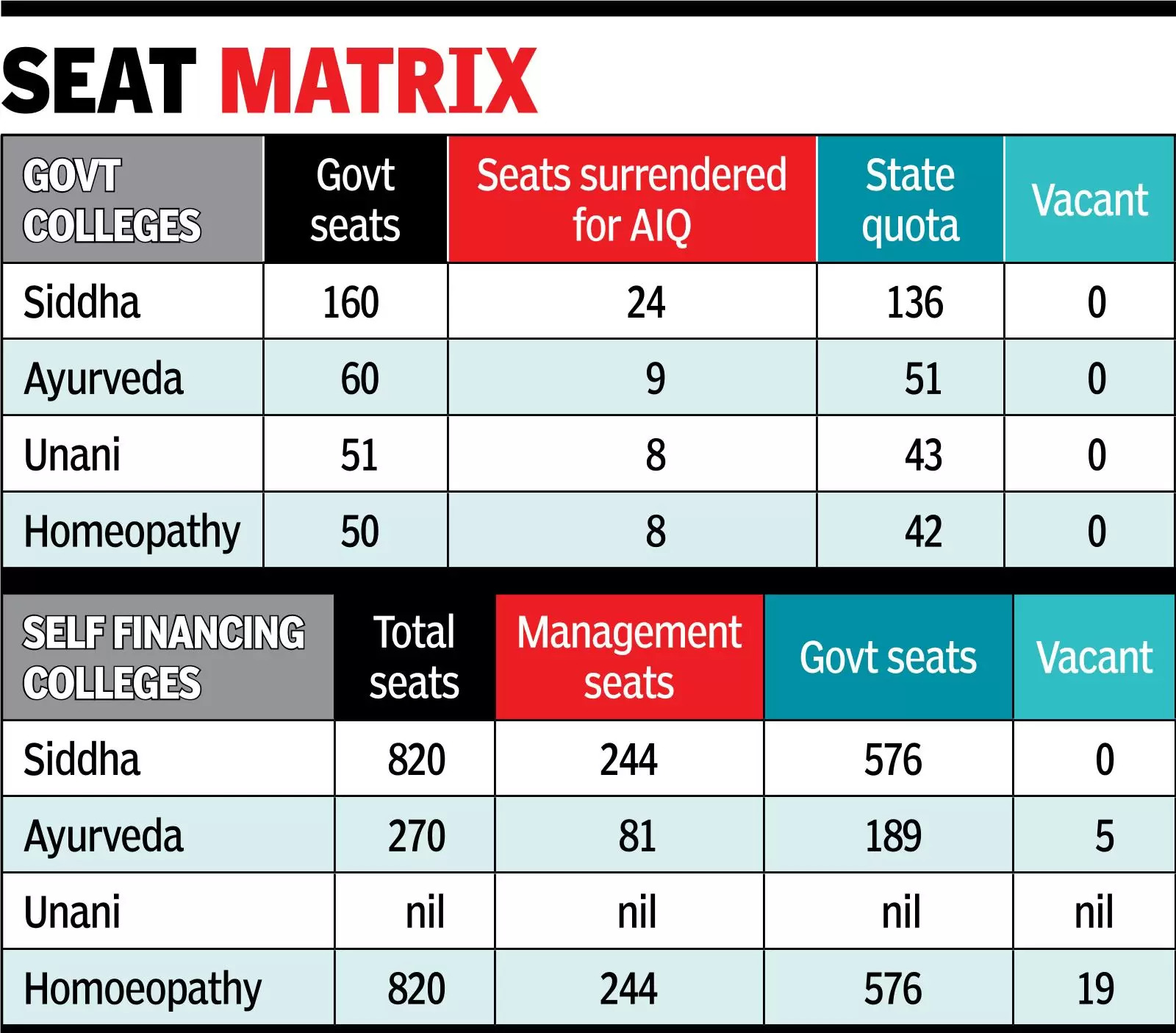
CHENNAI: Gaining admission to undergraduate courses in Indian medicine and homeopathy was tougher this year as the NEET-UG cut-off - the marks of the last student to enter the course - rose by an average of 100 marks in most categories, and by up to nearly 300 marks in select categories.


While all seats in undergraduate courses for unani and siddha across colleges were taken, five in ayurveda and 19 in homeopathy were vacant after nearly five rounds of counselling, officials at the selection committee for Indian medicine said.

The committee admits students to ayurveda, siddha, unani and homeopathy courses based on merit in NEET scores and the rule of reservation. "This year, we saw an increase in students interested in these courses," said committee secretary Dr M Krishnaveni. The top student to join the bachelor's course in siddha medicine had a NEET score of 592/720. The score was 585 for ayurveda, 551 for unani and 547 for homeopathy.
These students weren't exceptions, Krishnaveni said. "The difference in marks wasn't huge."
‘Offers galore for Ayush’

Krishnaveni said the last candidate to join siddha had a score of 539. “Barring unani, where the cut-off was 433, all others had a cut-off above 500,” she said. In 2023, the cut-off for siddha was 423, followed by 412 for ayurveda and 405 for homeopathy. The unani cut-off was 231 in 2023 compared to 433 in 2024. Barring unani, the cut-off for all courses in reserved categories was above 400 this year, while students with scores as low as 120 joined these courses last year.

Experts say the rise in cutoffs was expected as the MBBS cut-offs have increased several fold over the past few years. In 2024, the cut-off for MBBS in the general category for govt medical colleges was 650, while for self-financing colleges it was above 600. In reserved categories, it was around 470. “Many students who have written NEET-UG several times are tired. They don’t want to wait and try another year as it gets tougher with each passing year,” said Manickavel Arumugam, who counsels students.

Students and parents agree. “My nephew missed MBBS by two marks. He passed out in 2020 and most of his friends have graduated. We know we can’t afford to pay fees in private colleges. So, he decided to join siddha this year,” said Rajkumar E, who works for a pharmaceutical company. “Many AYUSH graduates now have offers from clinics, pharma companies and govt,” he said.

IIT-M admits five athletes under new sports quota

This initiative is offered through two supernumerary seats in each of its undergraduate programmes for Indian nationals, of which one will be reserved for female students.

CHENNAI: The Indian Institute of Technology (IIT) Madras has admitted five athletes with national accomplishments under its ‘Sports Excellence Admission’ (SEA) category for the academic year 2024-25, according to an official statement.

In February 2024, IIT Madras became the first IIT in the country to introduce admissions for athletes under the SEA category in its undergraduate programmes. This initiative is offered through two supernumerary seats in each of its undergraduate programmes for Indian nationals, of which one will be reserved for female students.

The five students who have been selected for admission at IIT Madras are: Arohi Bhave (volleyball) from Maharashtra, admitted into BS (medical sciences and engineering); Aryaman Mandal (water polo and swimming) from West Bengal, admitted into BTech (computer science and engineering); Nandini Jain (squash) from Delhi, admitted into BTech (computer science and engineering); Prabhav Gupta (table tennis) from Delhi, admitted into BTech (artificial intelligence and data science) and Vangala Vedavachan Reddy (lawn tennis) from Andhra Pradesh, admitted into BTech (artificial intelligence and data science).

“Sports Excellence Admission is an initiative of IIT Madras primarily to send the important message that children must be encouraged to play. I sincerely hope this reaches everyone,” said V Kamakoti, director of IIT Madras.

Monday, January 20, 2025

Held hostage by H-1B visa system, Indians show signs of depression, anxiety

From signs of depression and anxiety to not being able to visit their parents, some Indian H-1B visa holders took to social media to discuss how their lives have been hit by uncertainties. They might have to deal with the impact of H-1B visa curbs after US President-elect Donald Trump's inauguration on January 20.
Stability, a sense of security and hopes for the future, all go for a toss for H-1B visa holders in the US and those in the long queues for Green Cards. The H-1B visas, temporary visas for highly skilled foreign nationals in the US, also come with worries about paying the next bill, finding employment in 60 days if one loses their job and trying one's best to stay in the US and realise the American dream. Though Indians dominate the H-1B visa programme, with 72% of H-1B visas held by Indians, it comes at a cost.

With 2.7lakh scanned pages, archival project led by IITBombay on Narayana Guru to go online this May

A massive digitisation project undertaken by the Indian Institute of Technology (IIT), Bombay, in association with the Sree Narayana Mandira Samity (SNMS), Mumbai, will give a peep into the life of Sree Narayana Guru, who paved the way for a modern Kerala during the end of the 19th and the early part of the 20th century. The archive project, titled Narayana Guru Digital Research Resource Platform (NGDRRP), which began in 2023, will be fully available online this May. Siby K. George, Professor of Philosophy, IITBombay, and principal investigator of the project, said, ‘‘Detailed academic studies, especially in English, on Sree Narayana Guru are hardly available. 
The digital archive project is expected to solve this issue as over 2.7lakh pages have now been scanned and hosted on the platform.” According to Girija K.P., consultant and project coordinator who coordinated the digitisation and groundlevel work, the objective of the project is to compile, sort, classify, vet, and digitise literature on Sree Narayana Guru, currently scattered among individuals and institutions and unavailable to researchers, and to create a credible and systematic archive. It also aims to make available previously inaccessible materials, including magazines published during the Guru’s time. These materials may assist researchers and proponents of the Guru in gaining a deeper understanding of his multifaceted personality, Ms. Girija said. 
The scope of the project involved digitising extensive materials collected from the private collection of individuals such as G. Priyadarsanan at Varkala, public libraries, and personal collections of Guru’s disciples and followers. 
The documents will be launched in collaboration with the South Asian Open Archives. Some magazines (24 issues of Dharmam and 71 issues of Mithavadi) have been launched this month, said Pradeep Kumar P.I., Professor of Chemistry, IITBombay, and coprincipal investigator. Anish Damodaran of the SNMS, which funded the ₹42lakh project, said that to chronicle the history of modern Kerala, a comprehensive archive of Sree Narayana Guru was imperative. This forced the outt to take up the project with the IITBombay, he said.

Source: https://www.pressreader.com/india/the-hindu-erode-9WW6/20250120/281775634821359 1/1


https://www.pressreader.com/india/the-hindu-erode-9WW6/20250120/281775634821359

How is TRAI and the govt. combating spam? | Explained

How will blockchain technology effectively counter spam? What are some of the steps being taken by the government against unsolicited commercial communications? Have some of the measures already taken been effective against unwanted calls and messages? What is a do-not-disturb registry?

The story so far: The Telecom Regulatory Authority of India (TRAI) will be using distributed ledger technology (DLT) to register spam preferences from customers, TRAI chairman Anil Kumar Lahoti said. Spam rules will be tightened to make commercial messages traceable, the TRAI has indicated.

What is TRAI’s role in fighting spam?

The TRAI regulates the telecom industry, and its main role is in regulating Unsolicited Commercial Communications (UCC), the official name for spam. Starting in 2007, the regulator implemented a do-not-disturb (DND) registry, which would force telemarketers to abide by customer preferences when it came to commercial calls.

If a telecom customer signs up to the DND registry, they are not supposed to get any spam calls or SMS messages.

TRAI had also worked with an external agency to develop a DND app, which would allow customers to register their DND preference, and accept complaints. Under the Telecom Commercial Communication Customer Preference Regulation (TCCCPR), 2018, telemarketers who called or sent messages to DND-registered customers would receive warnings, and if enough warnings accumulated, they would be blacklisted from sending messages to telecom operators.

The DND app has not always been maintained by the TRAI, and was briefly unavailable from 2022 onwards. An SMS reporting facility where users would have to report messages in a particular format was available, but further steps were taken to make the process more user friendly. In 2024, TRAI mandated that DND reporting be made available on every telecom provider’s app.
What role does blockchain play?

In order to fight the deluge of spam messages, TRAI mandated in the TCCCPR that telcos use a blockchain ledger, also known as a distributed ledger, in order to store a constantly-updated list of approved senders of SMS messages. Telcos would also be required to approve specific formats of messages. For instance, an OTP message that goes, “Your OTP is 433212,” would be stored in the blockchain as “Your OTP is …” with space for a variable. These messages have been required to be sent from sender IDs, and not phone numbers.


This has been one of the most stringent rules that have been issued to fight SMS spam anywhere in the world. Blockchain as a technology allows for so-called immutability, which means that every stakeholder involved in a transaction has a reliable, un-tamperable version of the same data. At the time of the 2018 regulations, the necessity to use blockchain for the purpose of maintaining a spam exemption database was debated, as enthusiasm about the technology’s potential had spilled over beyond cryptocurrencies, where it continues to be a mainstay.

In 2024, the regulations were tightened to ensure “traceability” of messages, thus making sure that telcos would have a complete record of who issued a message before it is sent to an SMS gateway. This was aimed at plugging a crucial flaw in the system that would allow anyone to register on the blockchain solutions implemented by telecom operators and send out fraudulent or spam messages in spite of the systems in place to combat them. These, Mr. Lahoti has said, will be further tightened in the coming year.
Have these measures been effective?

For those who have registered their DND preferences, communications from legitimate businesses that follow the rules may have reduced. However, spam has a constantly changing character. While much of spam is merely commercial messages that may be annoying but harmless, the wave of digitisation has increased incentives to get around the protections against commercial messaging and calling. A wave of fraudulent calls have also emerged, with cyber frauds seeking to ensnare Indians in financial scams. Many of these operations are done outside the framework of SMS sender IDs, and are run through disposable 10-digit phone numbers, making it hard for real-time enforcement of anti-spam regulations.

There is also the issue of spam and scam calls from international numbers, which can be leased from certain online Voice over Internet Protocol (VoIP) providers, but appear as legitimate international call traffic.

Which are the other steps taken by the government to end spam?

The Department of Telecommunications (DoT) has launched the Sanchar Saathi portal, which has a reporting site called Chakshu. DoT has partnered with law enforcement, banks, and other stakeholders in order to accept reports of “suspected fraudulent” calls and messages, and has moved to cancel lakhs of numbers that are associated with unauthorised telemarketers and scammers.

It also set up the Telecom Security Operation Centre at its New Delhi headquarters to monitor suspicious internet traffic in real time. Meanwhile, firms like Airtel have taken steps to declare suspicious calls using Artificial Intelligence as “Suspected Spam,” a move that is being replicated by other telcos as well. The telco has also started labelling international calls on smartphones.

Saturday, January 18, 2025

JEE Mains 2025 session 1 from January 22: TOI Education / Jan 18, 2025,

JEE Mains 2025 admit card: The National Testing Agency (NTA) will commence Session 1 of the Joint Entrance Examination (JEE) Mains 2025 on January 22, 2025. Candidates are eagerly awaiting the release of the session 1 admit cards, which are expected to be issued in the next couple of days. Once released, candidates can download their JEE Mains 2025 admit card from the official website, jeemain.nta.nic.in.

Source: JEE Mains 2025 session 1 from January 22: Check admit card details here - The Times of India

Friday, January 17, 2025

JEE Main Admit Card 2025: What should you check on admit cards?

 JEE Main Exam 2025 Admit Card: The credentials required to download and access the JEE Main 2025 exam admit card are the application number and date of birth

 JEE Main Admit Card 2025: The National Testing Agency will soon release admit cards for the Joint Entrance Examination (JEE) Main 2025. When released, candidates need to download the hall tickets from the official website — jeemain.nta.nic.in.

The credentials required to download and access the JEE Main 2025 exam admit card are the application number and date of birth. But before the admit cards are released, many candidates don’t know what to check on it.

Here’s a guide for aspirants on what to check on JEE Main hall tickets before the examination to avoid last-minute chaos.

Source: JEE Main Admit Card 2025: What should you check on admit cards?  | Education News - The Indian Express


Joint Entrance Examination (Main) Exam Date On: 22nd - 30th Jan 2025


JEE Main Admit Card 2025: Release Date, Download Session 1 Admit Card, Direct Link

JEE Main Admit Card 2025 - The National Testing Agency (NTA) releases the hall ticket for JEE Main exam at least 3 days before the scheduled exam date. JEE Main city slip is also released by NTA before the admit card at jeemain.nta.ac.in.

JEE Main Admit Card 2025 - The National Testing Agency is set to release the hall ticket for the JEE Main exam 2025 on its official website - jeemain.nta.nic.in. The JEE Main 2025 admit card will be released by NTA at least three days before the exam scheduled date. Therefore, candidates can expect the hall ticket to be released by January 19, 2025, considering the session 1 exam will start from 22nd January 2025. JEE Main City Intimation Slip has been released by NTA at jeemain.nta.nic.in

JEE Main session 1 admit card link will be provided to candidates on their registered email address by NTA. The same can be accessed from the official website - jeemain.nta.nic.in and in this as article as well. To download the JEE Main admit card 2025, candidates must have a valid application number and password. In case, applicants have forgotten their password, they can reset it using their application ID provided to them after the successful submission of the JEE Main application form.


Source: JEE Main Registration 2025: Date, Session 1 Application Form, Fee, Steps to Apply | Engineering & Technology | IE Education

UGC bars three Rajasthan universities from awarding Ph.D. degrees over integrity issue, asks students not to enroll | Education - Hindustan Times

UGC Secretary Manish Joshi advised prospective students and parents not to take admission in Ph.D. programme offered by the universities. 

The University Grants Commission (UGC) has barred three universities in Rajasthan from awarding Ph.D. degree after they were found to be compromising the integrity of the degree.

The three universities include:


You 2025 Fortune revealed! Read Now

1) PAS University, Churu, Rajasthan

2) Sunrise University, Alwar, Rajasthan

3) Singhania University, Jhunjhunu, Rajasthan

In an official notice signed by the UGC Secretary Manish Joshi, the commission informed that decision follows the findings of a Standing Committee which was constituted by the UGC to monitor whether universities are following the procedure and awarding Ph.D. degrees in accordance with the UGC Regulations.

“One of the mandates of this Standing Committee is to suggest corrective measures and recommend action to be taken against erring Universities,” the notice stated.

“After analysing/examining/evaluating the information/data submitted by the univiersities, the Standing Committee has found that three Universities did not follow the provisions of the UGC Ph.D. Regulations and also the academic norms for the award of Ph.D. degrees. These Universities were given an opportunity to explain why they failed to comply with the provisions of the UGC Ph.D. Regulations, however, the responses received from these Universities were not found satisfactory. The Standing Committee has, thus, recommended that the UGC may debar these Universities from enrolling Ph.D. students for the next five years,” read the notice.

Source: https://www.hindustantimes.com/education/news/three-rajasthan-universities-barred-by-ugc-from-offering-phd-courses-over-integrity-issue-says-secretary-manish-joshi-101737024531056.html


Featured Posts

St. Francis Institute of Technology Designated as a Potential Nodal Centre for Universal Human Values

St. Francis Institute of Technology, Mumbai, marks a significant milestone with its designation as a Potential Nodal Centre for Universal Hu...