Thursday, December 17, 2015

Explained: What is Google’s Wi-Fi at 100 railway station project and how will it work

Explained: What is Google’s Wi-Fi at 100 railway station project and how will it work

Google will deploy WiFi at 100 railway stations in partnership with Railtel. Mumbai Central will be the first station to get free Wi-Fi by January 2016

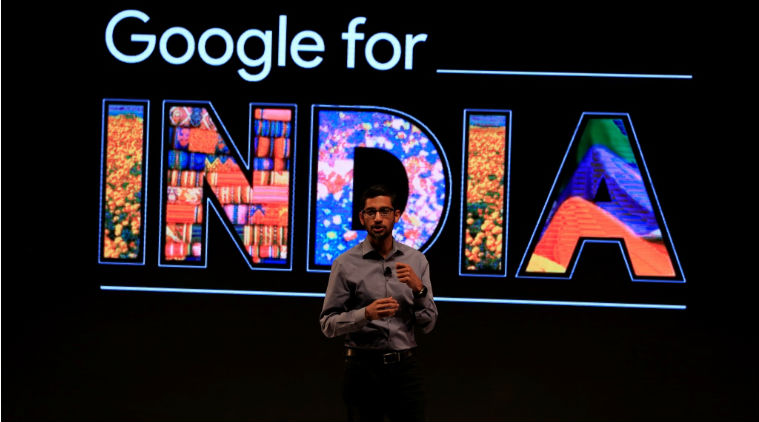
Google CEO Sundar Pichai announced company’s push to bring internet access to more users. The company also announced that Mumbai Central will get free Wi-Fi by January 2016 (Source: Express Photo by Renuka Puri)
Google CEO Sundar Pichai had first announced about the the company’s free WiFi at railway stations in India when PM Modi had visited the company campus in Mountain View, California in September. Under the project, Google plans to provide free and high-speed Wi-Fi access to railway commuters at over 400 stations in India. Google has partnered with Railtel Corporation to make this project a reality.
How’s the project going to scale out? Which stations will get covered?
According to Google’s announcement today, the first station to get free Wi-Fi under this scheme will be Mumbai Central, where testing has already been carried out. Google’s free Wi-Fi at Mumbai Central goes live by January, 2016. Google plans to make free Wi-Fi live at over 100 stations in India by the end of 2016. The free Wi-Fi scheme will target stations across each railway zone in India.
At the end of 2016, Google will evaluate the project to see how it will expand the free Wi-Fi scheme further. Google says that preparations are already on in multiple stations to make the project a reality.
So how exactly will Google’s free Wi-Fi work? Why has it partnered with RailTel?
Railtel is the PSU which owns a Pan-India optic fiber network exclusively on railway track. It has laid out over 45,000 kms of optic fibre networks across the country, which Google will utilise for its Wi-Fi.
In this case, Railtel will be the ISP, while Google will provide the Wireless Area Networks (WAN) and will set-up the points of access at platforms. It should be noted that Google’s free WiFi will only work at the platforms and is not meant for the trains.
Will Google have some guidelines, standards for this free public WiFi?
Google says the idea with its free WiFi is to ensure wide coverage and high capacity. According to Google VP for Access and Emerging Markets Marian Croak, the company sees a potential of 10 million users accessing its WiFi each day by the end of 2016 from across these railway stations. And Google wants to make sure that these 10 million users get broadband quality experience when using its Wi-Fi.
For instance, Google will try and ensure that the WiFi railway users who watch videos on the network get at least HD standard streaming. Google will also aim to maintain speed, efficiency across a board of devices.
Will the service always be free? What’s the revenue model here for Google?
Google says that the service will be free to begin with, although it has not yet specified whether it will eventually charge for this WiFi. It should be noted that free WiFi in other public places like airports is free for a limited time period only. On the revenue model, Google hopes that this will be self-sustainable and it will start exploring with different revenue models later on. For now the focus will be on getting the project up and running.
Source: The Indian Express dated December 17, 2015(Online)

Google CEO Sundar Pichai in India: Free Wi-Fi at railway stations, new campus for Hyderabad announced

Google CEO Sundar Pichai in India: Free Wi-Fi at railway stations, new campus for Hyderabad announced

Google CEO Sundar Pichai on Wednesday underlined the search giant’s intention to push for more internet adoption in India

Google CEO Sundar Pichai on Wednesday underlined the search giant’s intention to push for more internet adoption in India, announcing free Wi-Fi in 100 railway stations as promised to Prime Minister Narendra Modi on his visit to Silicon Valley earlier this year.
At a large-scale event of the company in New Delhi, Pichai, who was accompanied by other top executives of the company, announced plans to launch a “huge new” campus in Hyderabad and to recruit more Indians for business development too.
Pichai said Mumbai Central will the first of the 100 railway stations, getting Wi-Fi connectivity by December 2016.
The India-born CEO said the company wanted to connect Indians in their own languages and Android — the most popular mobile operating system in India — was already supporting up to 11 local languages. He said YouTube and Google Maps were already available offline in the country, while the “search team in India has made pages lighter and they now load faster”.
Google Search VP Tamara Yehoshua said 50 per cent of Indian internet users were on 2G networks, while those on 3G were complaining of 2G-like speeds. “Google plans to fix that with Google AMP pages,” she said, about the new product that is being rolled out in India. “We need to make sure our products work across Indian languages and that search works across 2G networks,” she said, reiterating how it was “inspiring” to give access to all those who have never experienced Internet before. She said Google will launch improved versions of live cricket scores and replays on search early next year.
Google will introduce a pause buffer feature allowing users to pause video, leave it to buffer, even leave the app or site and let it continue buffering, said Eyal Manor, Vice-President of Engineering for YouTube. He said content uploaded on YouTube from India has also doubled and time spent was growing at 150 per cent ahead of global figures.
Google Maps VP Jen Fitzpatrick said India ranks third in terms of local guides on Google Maps.
Rajan Anandan, Vice President of Google in India and Southeast Asia, said by 2018, more than 500 million users will be online in India from 29 states speaking over 23 languages. “But in 2020, over 30 per cent of mobile internet will still be from 2G connections. Google has been on a long journey in India to build products that connect more people, regardless of cost, connectivity, language, gender, or location,” Anandan said.
Google also confirmed that its Asus Chromebit will be available in India for Rs 7999. The Chromebit lets users upgrade their old PCs and desktops to get a faster, Chromebook like experience.

Source: The Indian Express dated December 17, 2015 (Online)

Featured Posts

Jio Institute Announces IDEA 2026 International Conference

The rapidly changing landscapes of Artificial Intelligence (AI) and Big Data demand global forums where cutting-edge discovery intersects wi...