Friday, March 3, 2017

Active Users for the Month of February 2017

Every month we select users who have made maximum use of the library. Below are our active users for the month of February 2017. The below users are entitled for 1 extra book.

Sr. No. Member No's.
1 TEJASWARARAO MOTAMARRI 13
2 SARVESH NARKAR 12
3 SAWANT SHIVANI SANDEEP SUMEDHA 12
4 SHAILIN SHAH 11
5 ASHOK MORE 11
6 ANTIYA AMISHA ISHWARBHAI GEETABEN 10
7 ADINATH BAJPAI 9
8 MASCARENHAS RACHEL NOEL JACINTA 9
9 VINIT NEOGI 9
10 RAVINA DESAI 9
11 PATIL ANKUSH LAXMAN ANJANA 9
12 JOSHI SHUBHAM PRAMOD VINITA 9
13 NIRAJ YADAV 9
14 BHATNAGAR RISHABH SUSHIL RITU BHATNAGAR 9

Friday, February 17, 2017

Learn Marathi language free of cost as 31-year-old Dombivli resident launches unique online course

Soon, take engg entrance tests several times a year

Soon, take engg entrance tests several times a year

NEW DELHI: Students aspiring to study at the country’s top engineering colleges are likely to get multiple opportunities in a single year to crack the tough entrance exam.
The move will significantly shrink an aspirant’s waiting time for the next test in case of failure to clear the first attempt at the Joint Entrance Examination (JEE) Main — conducted for admission to NITs, IITs and other centrally funded institutions.

For instance, if back-toback exams are conducted in December, February and April, a candidate will be allowed to write all of them, or she can opt for one or two. The best marks from any of the three tests will account for the student’s all-India ranking, which decides her eligibility for admission.

The National Testing Service (NTS), a new overarching agency that the government announced in its annual budget this February to conduct all entrance exams for higher education institutions, might hold the JEE Main fully online from the next academic session.

 The format will allow the NTS to hold the engineering test at least thrice a year, sources said. That way a student would not have to spend a full year studying for the test again.
At present, a student has the option of writing the JEE Main online or offline, but the exam is conducted just once a year. But only 125,000 of the almost 1 million students opt to take the test online.
“To ensure greater transparency and avoid instances of paper leak, the ministry is planning to conduct examinations through NTS on an online mode,” said a senior official in the human resource development ministry.

Sources said the NTS is likely to conduct all entrance examinations — including JEE, CAT, and UGC-NET — online from 2018.

Education experts welcomed the move, underscoring that several global screening tests such as the Scholastic Aptitude Test (SAT) and TOEFL are conducted up to seven times a year.
“This will ensure that a candidate is able to give his/her best if there are specific testing windows,” said Soumitra Roy of Prometric India, a global agency that had conducted tests such as CAT for premier business schools.

“This must be done provided there is adequate physical and technical infrastructure in a country like India with different demographics.”

To ensure students from rural areas don’t face obstacles in taking the online exam, NTS will help prepare them with through round-the-clock call centre support.

“NTS will establish an online testing mechanism which will be able to conduct online tests for at least 1 million students at a time with suitable systems for proctoring, instant display of marks and preparation of the merit list,” an official said.

The online system will ensure better safety mechanisms, according to Bipin Batra, executive director of the National Board of Examinations (NBE), which conducts entrance tests such as NEET PG and NEET Super Specialty for medical students.

Source: Hindustan Times, 17th February, 2017
Link: http://paper.hindustantimes.com/epaper/viewer.aspx


Thursday, February 16, 2017

LIRC Offering Scholar's Card and Merit Card Facility


Please Note…….

LEARNING & INFORMATION RESOURCE CENTRE   are offering –“Scholar’s Card” facility to first three toppersand theMerit Card“ facility to those students who have a GPA of =>8.6of respective branches every semester as a token of appreciation of their efforts.
The Privileges of book loan are as follows:
Topper
Privilege
Loan Period
1st Topper
3 extra library cards(Total 5 cards)
1 Week
2nd Topper
2 extra library cards(Total 4 cards)
1 Week
3rd Topper
1 extra library cards(Total 3 cards)
1 Week
GPA of =>8.6
1 extra library cards(Total 3 cards)
1 Week

Rules (for over-dues, reference and book care) remain the same for the above.
These cards will not be valid after the end of the particular semester.


Wednesday, February 8, 2017

Programme in IT Training by IIT-B

PROGRAMME IN IT TRAINING BY IIT-B

The Indian Institute of Technology, Bombay’s (IIT-B’s) Spoken Tutorial Project has started an IT training programme in collaboration with VG Vaze Arts and Science College in Mulund and spatial technologies company, Cybertech Systems and Software Ltd. The programme will be held at laboratory of Vaze College.
The one-year programme aims to provide IT training to IT and non-IT students across the country.
Using Spoken Tutorials, which are essentially a collection of ten-minute long audio-video tutorials, students will be trained in programming languages, office tools and graphic and circuit design tools, in a simple and interesting manner.
To sign up for the programme and know more, visit www.geocivic.in.

Source: Hindustan Times dated 8th February, 2017

Link: http://paper.hindustantimes.com/epaper/viewer.aspx

Tuesday, February 7, 2017

List of Active Users for the Month January 2017


Every month we select users who have made maximum use of the library. Below are our active users for the month of January. The below users are entitled for 1 extra book.
Sr. No.

Member No. of Transactions
1 CHOUDHARY SANTOSH RAMJANAM SARSWATI 13
2 KHAN ARBAZ SALEEM YASMEEN 13
3 CHAUHAN AMAN KISHAN MAYA 12
4 NIRAJ YADAV 12
5 AISHWARYA NAMBIAR 12
6 TEJASWARARAO MOTAMARRI 11
7 SAYALI JAWRE 11
8 ASST.PROF.RAMJEE YADAV 11
9 MISHRA NILESH MARKANDAY DHARMAVATI 11
10 SAWANT SHIVANI SANDEEP SUMEDHA 10
11 SINGH SATYAM RAJNARAYAN MAYA 10
12 SHAILIN SHAH 10
13 ASST.PROF.PRIYANCA GONSALVES 10
14 SONALI PARAB 9
15 KULKARNI OMKAR SANTOSH RAJASHREE 9
16 SARVESH NARKAR 9
17 HRISHIKESH MAHESH TELANG 9

MU to evaluate answer books online from next exams


Source: The Indian Express dated January 29, 2017

http://epaper.indianexpress.com/c/16667145

Friday, December 23, 2016

Govt plans single entrance exam for all engineering colleges from 2018

The government is considering conducting a single entrance examination for admission to all engineering colleges, including private institutions, across the country.
The proposed joint entrance examination (JEE) for engineering colleges, which is said to be human resource development (HRD) minister Prakash Javadekar brainchild, could kick in from 2018.
The test, pending clearance, will be on the lines of the national eligibility-cum-entrance exam (NEET) for entry into medical colleges, sources in the HRD ministry said.
It is aimed at bringing transparency to the admission procedure, including checking the practice in some private institutions of extracting a heavy capitation fee from students.
“The aim is to make the process more transparent, standardised, and free of corruption and commercialisation,” a government official said.
India has more than 3,300 approved engineering colleges affiliated to universities, with an annual approved intake of above 1.6 million students. But only about half of the seats are filled.
The current admission process at the graduation level is dependent on performance in entrance examinations conducted by various agencies.
The Central Board of Secondary Education (CBSE) conducts the JEE-Main for centre-funded institutions. More than 1.3 million students write this examination every year.
The top-rankers from JEE-Main are eligible to write the JEE-Advanced for the prestigious Indian Institutes of Technology (IIT). In the new system, students aspiring for the IITs will have to pass the nationwide common entrance test with high marks and take the JEE-Advanced.
These apart, a number of states conduct their own test. Others grant admission based on marks obtained in class 12.
Several private colleges have their individual entrance examinations. But “some of them, which are self-financed, charge high fees or sell seats in the name of management or NRI quota at a premium”, a source said.
Only a handful of students crack the tough exams set for top colleges such as the IITs, leaving thousands of aspiring engineers to dash for private institutions, many of which are notorious teaching shops.
These colleges have become a magnet for mostly middle-class families in a country where an engineering degree is considered a ticket to a lifetime of fat pay cheques or jobs in the US.
Some of the private colleges admit students without basic talent and aptitude for engineering, affecting overall quality, the source said.
Of the 737,000 graduates in 2014-15, only half found employment. Most of the students didn’t meet expectations of companies offering jobs.
The proposal for a single, nationwide test is viewed as an attempt to streamline the dysfunctional education system. It was discussed at a recent meeting of officials from the HRD ministry and the All-India Council for Technical Education (AICTE), the regulator for engineering colleges.
The council will issue regulations for the examination. Issues such as the number of times the examination would be conducted in a year and the minimum qualification marks are yet to be worked out.
A source said the AICTE is planning to conduct web-based counselling sessions for admissions to engineering colleges based on students’ all-India ranking obtained in the entrance examination.
“States would be invited to join the counselling process to fill the seats in colleges under their jurisdiction,” the source said.
The states will be able to prescribe their admission criteria, apart from the score in the entrance test. The JEE score will, however, be the minimum eligibility criteria, the source said.
 Source: Hindustan Times dated 23 December, 2016.
Link: 

Thursday, December 22, 2016

The new frontiers of Virtual Reality

The new frontiers of virtual reality

Virtual reality can change the way individuals and groups interact, and for those interested in experiencing and sharing its powerful benefits

Virtual reality opens the avenues to experience places and time periods otherwise inaccessible to an individual.
Virtual reality (VR) has entered its golden age and now has the potential to help people experience episodes and incidences, across time periods, from a uniquely first-person perspective. While VR continues to make its mark on entertainment, it has immense potential to allow people to experience something ground-breaking. It equips people to experience being in two realities at once, making ‘duality of presence’—being present in two ‘worlds’ at once—a possibility. This extrapolation of VR into reality has an extraordinary potential to create greater empathy, understanding, compassion, and connection to the ‘real world’.
Virtual reality has the capability to make one feel, and the power to make one ‘know’. By immersing in a ‘real’ experience, VR provides a perspective from prime sources and acts as a representation of the real world. It has the potential to positively impact sectors such as healthcare, media and bring immersive experiences to life.
Immersive healing
High-resolution imaging and detection technologies help enable precise, swift, and timely diagnosis, can limit the number of invasive procedures, and support preventive care. As an example, VR is currently being used to help patients suffering from post-traumatic stress disorder (PTSD). Utilizing Bravemind, a clinical, interactive, virtual reality-based exposure therapy tool, an immersive and realistic virtual environment as well as unique interactive scenarios can be recreated. These enable a full-body experience to help normalize the patients’ experiences, thus fast-forwarding the therapy in some cases by as much as two to three years.
Immersive discoveries
VR opens the avenues to experience places and time periods otherwise inaccessible to an individual. This feeds into man’s desire for continuous discovery of the earth, ocean and even the stars. One such example of this is the creation of Cry Out: The Lonely Whale Experience, an underwater VR expedition. It takes the viewer into the depths of the sea where they can witness the underwater life and how pollution has disrupted and injured the delicate ecosystems that create our oceans. This experience educates individuals about the implication of a mere ordinary act on climate change.
Immersive action
VR has also made an impact on journalism, bringing stories closer to life for viewers. With video content fast becoming one of the most popular modes of consumption, many media houses are significantly investing in platforms which enable a video-first content approach. With a firm foundation of traditional journalism, experiences are designed which offer viewers a fully embodied walk-around technology. This offers a virtual but “first-hand” sensation of being an actual witness as a story unfolds.
Many media houses internationally have already ventured into virtual journalism and have produced numerous VR documentaries. With the rapid technological advancements in India, VR stands at the cusp of altering storytelling forever. Indian documentaries such as Cost of Coal (India’s first documentary in VR) and Displaced, planned for release in 2016, are indicative of the potential in the technology.
What’s next?
VR can fundamentally change the way individuals, groups and organizations interact, and for those interested in experiencing and sharing its powerful benefits, it offers an exceptional opportunity, perhaps unlike any other medium. To realise the full potential of VR, pioneering VR headsets and VR-capable hardware and software are required. This is only possible through the partnerships and vision of companies and organizations that bring the most cutting-edge technology to this virtual table. And that’s the reality.
Roy Taylor is corporate vice president of alliances, Advanced Micro Devices Inc.
 

MS MARCO teaches AI to answer questions like humans


Source: Daily News & Analysis dated December 19, 2016

Microsoft releases MS MARCO dataset to train AI systems

Microsoft releases MS MARCO dataset to train AI systems

ranganmajumder
Microsoft Corp. has made yet another big bet in its quest to help lead the development of artificial intelligence with the release of a new dataset containing 100,000 questions and answers.
Called MS MARCO, or Microsoft Machine Reading Comprehension, the dataset is being made available for researchers wishing to train their AI systems. The company says the anonymized data is based on real-world queries typed into its Bing search engine, and that the aim is to make AIs better able to understand questions in a conversational context than they are now.
Microsoft explains that while virtual assistants like Cortana and Siri are already quite adept at reciting facts and figures like the population of certain cities or previous World Series winners, they’re not quite so comfortable with more complex or ambiguous questions. For example, if someone asks Siri what’s the current state of the war in Syria, most virtual assistants will simply provide search engine results that the user then has to comb through to find the answer.
That simply isn’t good enough for Microsoft, which believes its dataset can be used by virtual assistants to provide more definitive answers to such questions. The idea is that instead of simply providing a page of search query results, AIs might be able to analyze those results themselves and come up with an actual answer to the question.
“In order to move toward artificial general intelligence, we need to take a step toward being able to read a document and understand it as well as a person,” said Rangan Majumder (above), a partner group program manager with Microsoft’s Bing search engine division who is leading the effort. “This is a step in that direction.”
Microsoft said the MS MARCO dataset contains questions that its researchers found “interesting.” The answers were based on existing web pages and verified to be accurate by real humans, so as to try and teach AIs to do the same thing themselves. Microsoft said the dataset is available for researchers for free.
The release of MS MARCO came at the end of a busy week on the AI front for Microsoft. Last Monday, the company made headlines with the announcement of a new fund for AI startups, which has already taken a startup called Element AI under its wing. Element AI, is based in Montreal, is working to build commercial-grade AI systems and support the work of local startups trying to apply neural networks in new fields.
Also last week, Microsoft announced a preview of the Cortana Skills Kit and Devices SDK, which are designed for manufacturers that want to integrate Cortana into various smart hardware devices, from cars to home appliances.
With the Cortana Devices SDK, Microsoft is hoping to take on Amazon.com, Inc.’s Alexa-powered Dot and Echo devices, and also Google Inc’s smart home speaker Google Home. To do so, Microsoft is collaborating with Harman Kardon, a brand under Harman International Industries Inc., to create an Amazon Echo-like device that’s integrated with Cortana’s AI capabilities.

Source: http://siliconangle.com/blog/2016/12/18/microsoft-releases-ms-marco-dataset-train-ai-systems/

Android App Lets Visually Impaired in India Listen to Texts in Native Languages

Carnegie Mellon and Hear2Read Make Free Software Available

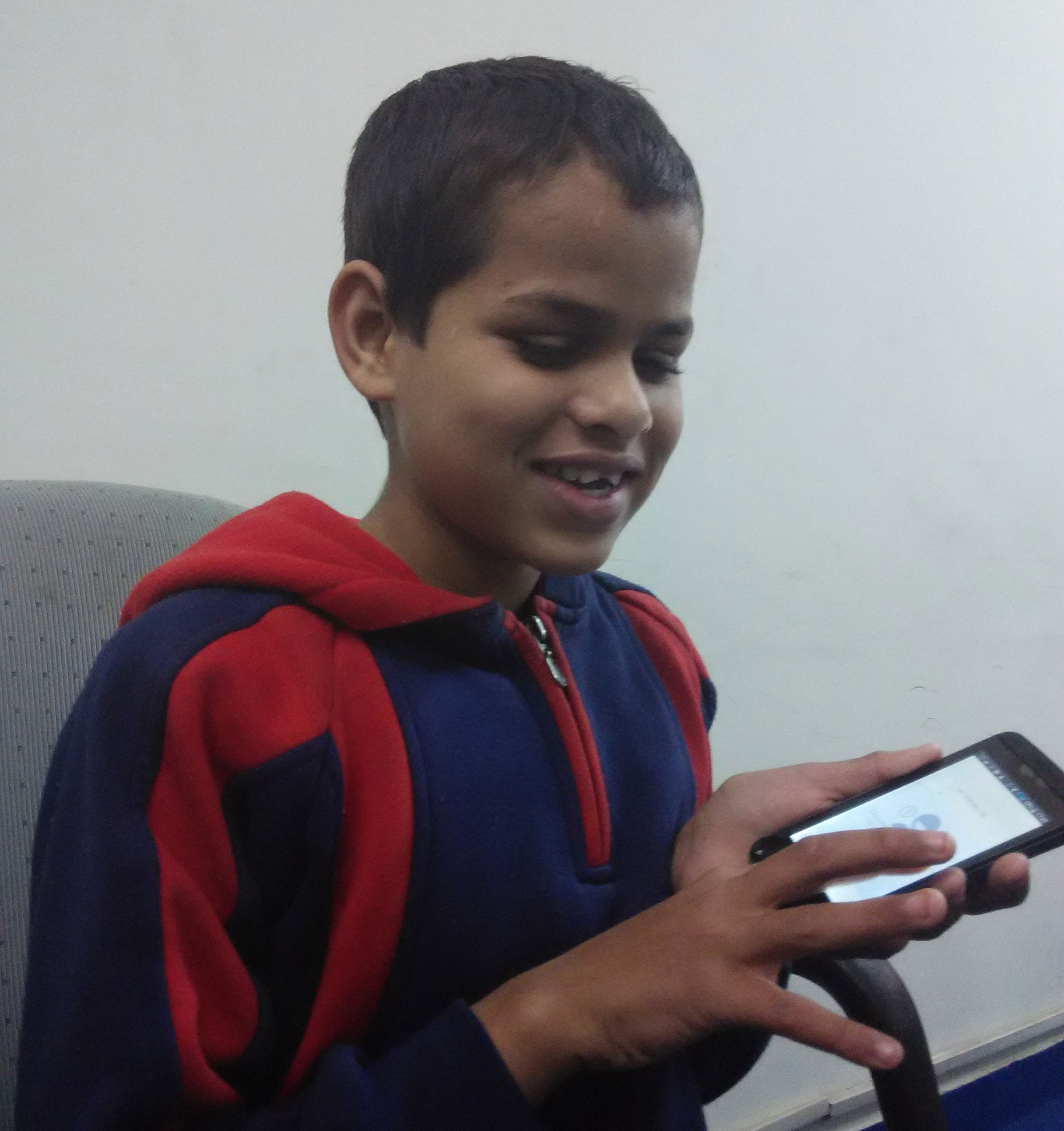
A visually impaired boy in India uses open-source software developed by CMU and the Hear2Read project that converts electronic text written in Indian languages into messages he can hear.
BY Byron Spice - Thu, 2016-08-04 09:30  Printer-friendly version
Millions of visually impaired people in India may benefit from free, open-source software for Android devices that converts electronic text written in Indian languages into messages they can hear.
The text-to-speech (TTS) software, developed by Carnegie Mellon University in collaboration with the Hear2Read project, can now be downloaded free of charge from Google Play. Tamil is the first language offered, with subsequent releases of seven major languages — Hindi, Bengali, Gujarati, Marathi, Kannada, Punjabi and Telugu — expected over the remainder of the year.
Four out of five people in India speak one of those eight languages. India has 22 official languages in all. More than 62 million Indians are visually impaired.
"We're looking to create speech output for as many languages as possible," said Suresh Bazaj, a serial entrepreneur in the San Francisco Bay area and founder of Hear2Read.
TTS software is commonplace in the United States and many parts of the world, but Bazaj said good quality TTS for Indian languages is difficult to find, difficult to use or unaffordable. Yet the need is great — only 10 percent of blind children in India get any education, and 90 percent of visually impaired Indians live in poverty.
"Making it available as free, open-source software thus was a key goal," said Alan Black, a professor in the School of Computer Science's Language Technologies Institute (LTI). "People should be able to download this and it should just work. We put a lot of effort into making this accessible and easy to use."
Bazaj met Black, a scientist internationally known for his work in speech synthesis, through Alok Parlikar, a former student of Black's, two years ago and recruited him to the project. While the LTI had a wealth of knowledge and tools for creating TTS software, the Hear2Read project inspired Black and his students to develop a system for doing so repeatedly, efficiently and for producing user-friendly software.
"Each language is different, and historically TTS systems have been done one at a time," Bazaj said. "We looked at commonalities of Indian languages and developed tools to apply the same technology to multiple languages."
The system developed by Black's research team enables creation of a baseline TTS system after recording 2–3 hours of clear, consistent speech from a native speaker. The open-source text read by the speaker comes from various sources such as Wikisource, books and periodicals. (Check out the video below.)
Though the machine learning process used to create voice databases requires large-scale computing, the resulting database for each language is relatively small and can run on low-end Android phones or tablets that retail for less than $100 (7,000 Indian rupees). That cost threshold is within guidelines established by the Government of India's Assistance for Disabled Persons program, which helps people with disabilities purchase assistive devices based on income.
The conversion from text to speech is done in real-time without internet access, as most people in India either do not have continuous internet access or cannot afford it.
The Hear2Read app works with the Android Talkback accessibility option that allows people with low vision to use applications such as web browsers, email, SMS (texting), phone calls, word processors, spreadsheets and book readers.
For Bazaj, this project has personal meaning. He has had retinal detachments in both eyes that were successfully repaired. He was fortunate to have access to excellent medical care, which is not the case for most people in India. He believes the ability to read is directly related to a good quality of life, and so his mission began.
"Like any startup, I jumped into it not knowing how deep the pool was," Bazaj recalled. After meeting Black, he began supporting a CMU student to develop TTS for Indian languages. In addition, he has recruited more than 50 native Indian speaking volunteers based in the United States and India.
"This project couldn't have been accomplished without the dedication and support  provided by our selfless volunteers," Bazaj said. The San Francisco Bay Area non-profits Access Braille and Indians for Collective Action have provided funding to support the project.
###
Carnegie Mellon University is a private, internationally ranked research university with programs in areas ranging from science, technology and business, to public policy, the humanities and the arts. More than 13,000 students in the university's seven schools and colleges benefit from a small student-to-faculty ratio and an education characterized by its focus on creating and implementing solutions for real problems, interdisciplinary collaboration and innovation.
Hear2Read is a volunteer organization dedicated to bridging the digital divide for blind and low-vision Indic language populations. Our mission is to open doors to all education, employment and business opportunities for the visually challenged.

Video: https://www.youtube.com/watch?v=uy2iGCwmgbw&feature=youtu.be

Source: http://www.hear2read.org/press.php

For More Information: 
Byron Spice | 412-268-9068 | bspice@cs.cmu.edu

Teachers are backbone of our society: Dev Lahiri

According to data tabled in the Lok Sabha by the Human Resources Development Minister on December 5, 2016, 18 per cent positions of teachers in government-run primary schools and 15 per cent in secondary schools are vacant nationwide. Educationist Dev Lahiri talks about whats plaguing the system.

What’s the biggest problem our education system is facing?

Our teachers. It’s the last choice for most, for various reasons. They just want to get the job done with and make money from tuitions. Most teachers have very little connect with students and don’t know, for instance, how to keep them engaged on days they are ‘switched off’ and don’t want to know Maths or Science. Good teachers link curriculum to life in a very imaginative way.

How do we get the right kind of people on board?

We need to put out the message strongly that teachers are the backbone of society. Thanks to the Nehruvian ethos, right after independence the emphasis was on engineering and medicine, then as corporate world took over, MBA became big, then IT and finance. But school teaching was never given priority, and so even today we don’t have a single teacher-training institution with the brand equity of an IIT or IIM. We need to make teaching a prestigious, well-paying, aspirational profession and have an elite examination like IAS for it. Teachers must be held accountable with stringent assessment and accordingly promoted. Pride (with substance) needs to be built into the profession. In Finland to become a good teacher is like getting into an IIT!

You’ve worked with several schools. Do you see a flaw in the mindset?

Schools are obsessed with certifications and not education. The system itself is flawed. Students have to choose between Commerce, Science and Arts as early as Class 9. At that level you should be able to do physics and Shakespeare, music and Maths, Humanities, Sociology and Political Science, and understand the connection between all diciplines. The US offers this even at university level. Our system is repressive. CBSE has a range of wonderful subjects, but it’s so difficult to find teachers, especially for the Humanities, because it has no tuition market. The Humanities are largely scoffed at and we (the nation) are paying a heavy price for it.

Wouldn’t it be better at boarding schools?

Boarding schools have a great opportunity for non-curricular activities, value building and citizenship and it does wonders to kids. But they too are facing competition from the tuition market. Post Class 10, parents want to remove their kids and get them seriously involved in professional exams. Therefore, some boarding schools have started outsourcing that part to tuition academies. Ironically, that’s pushing corporates to take employees for group and outdoor activities to develop their leadership skills and out of the box thinking.

No board seems to be doing well, including the once-prestigious ICSE. What’s the reason?

CBSE is constantly working towards upgrading and the NCERT’s doing good research for text books. But there’s no support and there’s a lot of heterogeneous activity thanks to our numbers. Moreover, it often becomes a political tool in the hand of governments; it should be neutral. As for ICSE, it’s become the preserve of a very small community that in the past gave us amazing teachers, but has no new thinking going on today thanks to brain drain. State boards are the greatest concern, 80% in some states is equivalent to 40% in others.

Is there any attempt to standardise scores with mechanisms like GPA?

No, but there should be. The focus is entirely on higher education; no one talks about schools even though they preparing you for it.

And what about contemporary issues pertaining to students?

Bullying is a big problem, but heads try to push all issues under the carpet, increasing the danger. We need honest dialogue between all stakeholders on substance abuse, atheism and gender issues, but our schools have no place for it. Hence, even today, in co-ed schools, when girls make requests regarding their periods, a titter goes around the class and ill-equipped, embarrassed male teachers end up tackling it ham-handedly.

You’ve been advocating student-led solutions. Can they help?

I have great faith in young people, but how will their creative juices flow, when they are so busy trying to get that 99%? With students at the university I work in, I’ve created a peer counselling programme to rescue kids who are getting drunk and putting themselves in danger; they can call the university for help or to be picked up when in vulnerable situations.
Source: Daily News and Analysis dated 20 December 2016

Tuesday, December 13, 2016

e PG Pathshala: A Gateway to all Post Graduate Courses


e-PGPathshala is a one portal under which High quality, curriculum-based,interactive content in different subjects across all disciplines of social sciences, arts, fine arts & humanities, natural & mathematical sciences, linguistics and languages is being developed.An MHRD, under its National Mission on Education through ICT (NME-ICT), has assigned work to the UGC for development of e-content in 77 subjects at postgraduate level. The content and its quality is the key component of education system.
e-PG Pathshala provides e-content for post-graduate courses in various subjects in four quadrant. It can be accessed as Open Educational Resource where no teacher support/hand-holding for students is available. SWAYAM is a web platform on which MOOCs shall be hosted. These MOOCs shall have teacher-student groups where MOOC coordinator/tutor/teacher will be interacting with the learner. A learner can earn certificate/credit on successful completion of course on SWAYAM
e-PGPathshala hosts the content for PG students which can be used for offering courses through MOOCs (SWAYAM). Every paper in a subject can potentially be offered as a course by converting as per the guidelines.

Thursday, October 20, 2016

READING INSPIRATION DAY 2016 - REPORT

 READING INSPIRATION DAY 2016


“Vaachan Prerana Diwas‟ was celebrated at St Francis Institute of Technology to commemorate the birth anniversary (October 15) of Dr. APJ Abdul Kalam. As part of the celebrations, the library organized an “Exhibition of Books‟ and “Take Away‟ of selected books and magazines. The library received a very good response from students and staff as there were around 150 visitors. The Book Exhibition covered books on a variety of topics to meet the varied interests of the students and staff community. The library and the staff was happy organizing this event and marked the “Vaachan Prerana Diwas‟ by offering a tribute to the vision and knowledge of Dr. APJ Abdul Kalam.

Following two initiatives were undertaken on this auspicious occasion:

Online Book Recommendation Form – Especially for the Students

Today In News: Pointers to selected and interesting news feed